

“Damn the Novel!” An author’s cry against a privileged genre
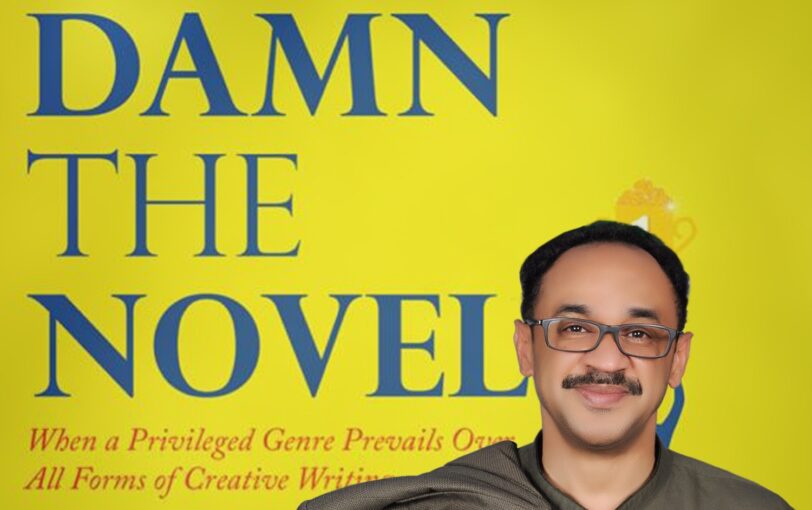
In a series of forty-five short essays that constitute his book translated into English under the title “Damn the Novel: When a Privileged Genre Prevails Over All Forms of Creative Writing,” Sudanese-born poet and essayist Amr Muneer Dahab denounces the privilege granted to the novel, the literary genre that is treated by publishers—and viewed by the public—as superior to all others and is virtually guaranteed marketability and profitability, to the detriment of others.
In this series of posts, the prolific author shares excerpts from the book.

This week: Chapter 27
The Age of the Soap Opera
We saw earlier that the prominent Egyptian novelist Naguib Mahfouz during the mid-1940s considered the novel to be the poetry of contemporary history. He even adorned it with absolute supremacy over all the creative writing genres. In the Arab literary scene, the prophecy of Naguib Mahfouz was late in being concretized if we believe that it was already the trend in the rest of the world. We state this with a note that Naguib Mahfouz did not utter his statement as a prophecy but, he believed, as a new reality that was actually realized in the world of literature and art.
What we have discussed about the Egyptian critic Gaber Asfour reveals that he basically did the opposite concerning judging our era from the perspective of a given literary genre having supremacy. Asfour felt a reality, then launched it after having reformulated it in a very summarizing title: a prophecy. But the so-discovered truth somehow got bogged down, so the prestigious critic corrected the dictum, changing “the Era of the Novel” into “the Era of Narration.” In the midst of all this, poetry surprisingly remained steadily alive in the hearts of Arabs showing unwillingness to surrender to the hits of novelists and their supporters, who believed the hits would definitely knock verse down. But poetry surprised them every time, standing before the counting reached ten. It stood again and again to prove its appealing presence not necessarily in the peak of the Arab creative scene, but noticeably against other Arabic literary genres whose course of taking exclusive possession of (literary) supremacy is clearly fluctuating . . . in the Arab scene at least.
“What is the most dominant genre of the time?” This is a question that cannot be avoided easily. Those creative writing forms seemingly cannot live in the arena of literature without the supremacy of one genre over the other genres. And this is a problem of writers and their supporters—fans of literary arts. It does not exceptionally concern a given literary genre, especially since none of the rivaling categories is new to the literary arena in the Arab world.
As is the custom (the literary natural disposition) and as we showed above, the well-known TV drama writer Osama Anwar Okasha kept seeing (perhaps since the mid-1980s) that literature is living the era of TV drama. On a TV meeting in the mid-1990s (I believe it was on a Lebanese channel), Okasha advised his fellow novelists and story writers to turn to writing TV drama (soap operas) considering that written literature is retreating back against what is called visual (drama) literature.
Interestingly, considerable novelists and short story writers were affected by Okasha’s prophecy. So, most of them remained unable to refute it with bold responses. When they are asked about the reasons behind holding to the novel or the short story instead of turning to TV drama, they answer that they can only find themselves in writing narrative fiction. This answer is so timid. However, a more daring/frank reply was made by a Syrian novelist on an Egyptian channel during the same era. The Syrian novelist stated that she does not have “the character” of writing a TV drama of thirty episodes. It is known that a scenario of thirty episodes if printed matches the size of few long novels. That’s in addition to the fact that after signing the contract, the producers of TV dramas do not allow the writer to be inspired slowly, as the case must be with any novelist working on a new piece (which may take one full year or even years). Actually, “The next Ramadan”[1] is most of the time the ghost that is haunting all those who work in TV drama, not only its writers, to finish the work with ultimate speed regardless of whether the inspiration flows smoothly or not.
If Okasha’s statement can be considered unrealistic at that time, his prophecy has at last come true, and its manifestations are still prospering under the fact that we are living in the era of TV drama, but probably not in the way that the most Arab famous scenarist meant. Nowadays, the heroes of the proclaimed TV drama era are not the writers but the actors and the directors, and somehow the producers, too. There are other heroes/stars who work in related fields, namely set design, cinematography, wardrobe, editing, etc.
Accordingly, writing workshops (groups of writers working on TV series) emerged as the greatest threat to the individual writer’s stardom. Writing within workshops is actually a Western innovation that made its way to the Arab world. Indeed, it is an idea that comes with some merits. Perhaps the most important one is richness of insight and inspiration every time the audience watches an episode. This is achieved either through having all writers participate in writing the episode or having every writer deal with one or more episodes in a way that not only refreshes the work but also entertains the viewers, who supposedly should not feel boredom no matter how many episodes they may follow.
Okasha was probably looking at these workshops when he expressed his irritation about the admiration foreign series receive from Arab viewers. Okasha did not get the chance to live in the era of Turkish drama which challenged the Arabic drama within Arabic satellites, with a lower professional writing level compared to American soap operas. Indeed, the Turkish drama managed to maintain its seat in the Arab scene even during intense political crises.
Unlike drama, narrative fiction is still resisting writing workshops except for shared work between two novelists as in some test cases. Luckily, story writers and novelists still enjoy the status of “individual star” when they address their work to the audience regardless of the role of critics and publishing houses in marketing/propagandizing the writer.
Novelists might be pleased when their works are turned into TV dramas or movies because they achieve more glory and have more to record in their biographies, but turning a successful literary work into a TV drama or a movie is not always safe for the writer. Literary pieces of work, when turned into visual scenes, may appear beautiful and even reach huge success, but not in a way that complies with the writers’ thoughts and perspectives in the original literary product.
Could that be the reason why the American writer Sue Grafton refused, as stated in Why We Write, to sell the rights of her books to movie producers and threatened her children that she will haunt them if they do so after she dies?
[1] During the month of Ramadan, satellite channels in the Arab world are usually full of works of drama (especially soap operas) to be broadcasted exclusively in the sacred month.


Soumanou Salifou (administrator)
Soumanou is the Founder, Publisher, and CEO of The African Maganize, which is available both in print and online. Pick up a copy today!