

“Damn the Novel!” An author’s cry against a privileged genre
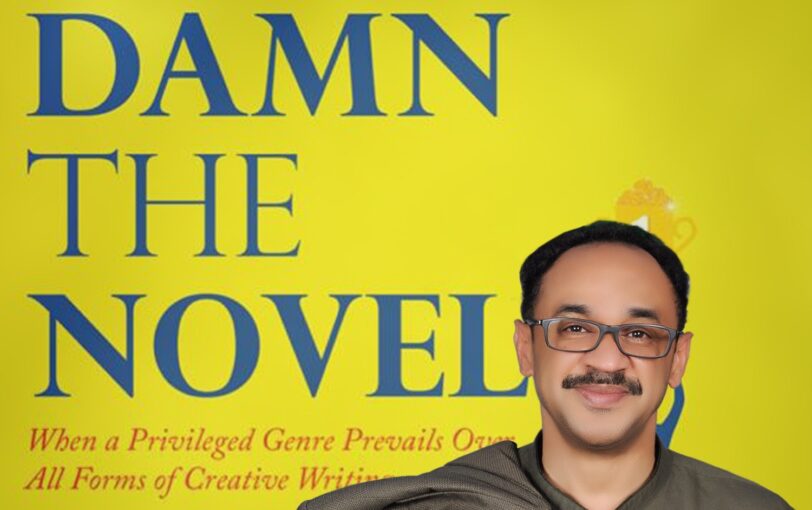
In a series of forty-five short essays that constitute his book translated into English under the title “Damn the Novel: When a Privileged Genre Prevails Over All Forms of Creative Writing,” Sudanese-born poet and essayist Amr Muneer Dahab denounces the privilege granted to the novel, the literary genre that is treated by publishers—and viewed by the public—as superior to all others and is virtually guaranteed marketability and profitability, to the detriment of others.
In this series of posts, the prolific author shares excerpts from the book.

This week: Chapter 31
Writing License
In the book O Writers, Be Humble, I have discussed “instruments of writing permit/license” which top critics are clinging to for authorizing a writer, not necessarily the best, as a glorious one while they neglect excellent ones just because they do not appreciate the way they write or do not like the writers themselves. We have stated that critics are only human, and it is not expected for them to evaluate people with perfect justice. And it will not be considered as strange when one of them is touched by an evil suggestion to bring down a glorious, kind-hearted writer due to mere personal (ill) desires.
I have also stated in the above-mentioned book what I termed the obligations of loyalty and obedience, as follows: “If the obligations of loyalty and obedience mean that the writer should waiver himself and should write in the way that critics desire, there may be probably three clauses as the following: The first is ‘permissibility without disapproval.’ This one occurs when the writer consents to the critic’s provisions when the former realizes that the latter is right. The second is ‘permissibility with disapproval.’ This one occurs when the writer consents to the desire of the critic to satisfy the latter’s arrogance and not because of pure critical provisions, be it right or false. The disapproval here is that the writer consents willingly to hand the steering wheel to someone else to direct his creative production even if the writer is still holding its details tight. The third case is when the critic who holds the instruments of permission insists that the writer stand by his stance to propagandize the types of creativity and writers that the critic desires and vice versa, not to praise any adversary even when there are some who are praiseworthy. Perhaps the most saddening here is when the writer finds himself unable to condemn when there is disqualified creative work within the side of ‘the stamp holder,’ the critic. And if the third case is morally common, then there will be no harm to ask the following question: Is it enough for critics to be only humans to have such sins forgiven?”
In this context, the answer for the last question is not our concern in the first place. The aspersions of negligence toward an artful writer seem to basically be related to people’s customs throughout different eras and places. In brief, the meaning of this deed/custom is that popularity and praise are not always gained by the most skillful creators but are frequently gained by some less talented creators, and this happens for many reasons. And perhaps the closest reason here is that the most popular is the easiest and not necessarily the best. Or, in the best cases, the most popular is the easiest among the best ones.
Besides, there is also what we have mentioned earlier concerning popularity and praise as a result of following the compass of the heart (not reason) on the part of critics, the media, or readers. In this, they might be innocent of bad intentions to eliminate the best in favor of the less eligible according to the scale of creativity. To shorten the issue of bad intentions in marginalizing the artful/skillful writer in favor of the humble one, the term “premeditation” sounds more practical instead of “ill will.” Every party has his own justification for his premeditation.
So what concerns us here is not the campaign about how the popularity of literary works disregards their artistic/creative levels. Our concern is the acclamation of this literary product based on its genre/formal identity. More specifically, we mean premeditation when (intentionally) helping the novel seize literary privilege/authority at the expense of other existing genres through incitation by its supporters who in turn have their motives in such bias.
With the widespread novel “fever” or “fashion” according to our recurrent previous description, the influential authoritarian power of the critics has become more tense (and provocatively irritating?). By means of their authority, they permit a “sect” in particular, while they neglect other versions of literary variations. Cultural media is also an easygoing provocative contributor besides the pliable, “innocently” obedient audiences.
Still, the worst of all concerning the novel becoming dominant in the current world of literature so that it’s considered an “authority,” which is enough to justify any literal existence and grant popularity, is that the circle of compliant drummers of the novel’s fashion/supremacy/fever has become wider to include the authors themselves, including writers of non-narrative genres such as poetry and the essay. While novelists are overwhelmed with glee and pride seeing their literary genre adorned with that majestic crown, many non-novelists did not stop at the limits of surrender to the novel as a gracious and antecedent genre. Actually, they preferred stepping far from their genres, the ones that incurred wrath, to the most indulged one in the markets of literature, and all of them are waiting for the signal from the Master Critic: “Bless you, and welcome to the novel’s altar.”


Soumanou Salifou (administrator)
Soumanou is the Founder, Publisher, and CEO of The African Maganize, which is available both in print and online. Pick up a copy today!