

“Damn the Novel!” An author’s cry against a privileged genre
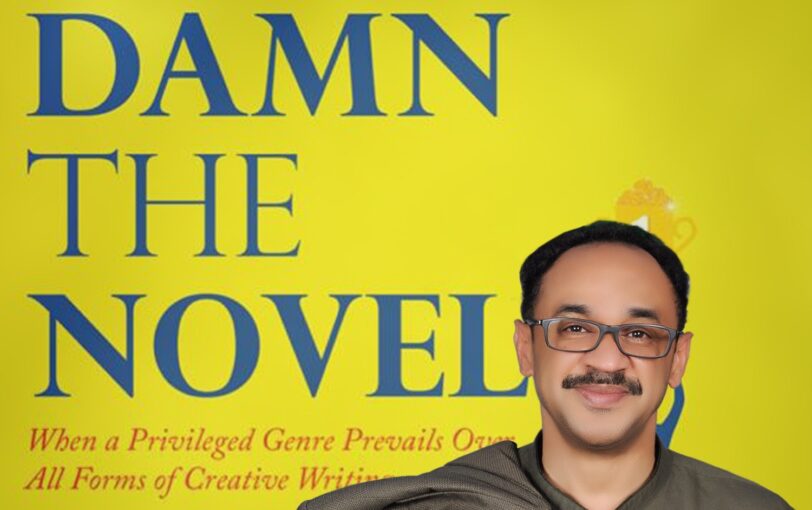
In a series of forty-five short essays that constitute his book translated into English under the title “Damn the Novel: When a Privileged Genre Prevails Over All Forms of Creative Writing,” Sudanese-born poet and essayist Amr Muneer Dahab denounces the privilege granted to the novel, the literary genre that is treated by publishers—and viewed by the public—as superior to all others and is virtually guaranteed marketability and profitability, to the detriment of others.
In this series of posts, the prolific author shares excerpts from the book.

This week: Chapter 39
Beyond the Awards
“My happiest moments as a writer were when I won the Orange Prize for the novel, partially because I had lost it in the past against The Sorcerer’s Apprentice. At the time of failure, I thought there was nothing wrong with it. It pleased me to have been nominated, and because Carol Shields won, but when you won, I thought, ‘Oh, God, that’s really better, it’s more fun than losing.’ ”
That was the American novelist Anne Patchett in Why We Write expressing her feelings while winning a prestigious literary prize. As a woman she directed her feeling of winning that award and feeling lost in a previous experience. Patchett reveals sportsmanship at the loss and happiness by looking at the half-filled cup when she won the award, and then returned to believe that the ecstasy of victory is far beyond the pleasure of showing patience after failure.
Writers who rejected high literary prizes (Nobel as the most prestigious one) are well known, although they are few, and it was not for those who specifically thought that their rejection was in fact increasing their fame. There have been three. Two of them were famous before they rejected the award: the Irishman George Bernard Shaw and the Frenchman Jean-Paul Sartre. Shaw rejected it because, according to the expression attributed to him, “it is like a lifeline thrown to someone after reaching safe lands,” meaning that the prize came late and he thought it would add nothing to his life. As for Sartre, his reasons are more determined in terms of the statements attributed to him; it appears he rejected the award so as not to become restricted by the award. Russia’s lesser-known Boris Pasternak rejoiced at the announcement of his Nobel victory before the Soviet authorities exercised pressure and forced him to apologize for not accepting the award for his well-known novel, Dr. Zhivago. The Russians saw that the CIA had a great role in the high-profile writer of the novel and could serve their interests in the mayhem of the Cold War.
Who is the writer today that might dare to reject an award? This is a question for the purpose of censure/condemnation and not for seeking an answer, considering the) fluttering( reaction of writers toward awards.
Awards have become the section that writers—both famous and those who became famous by an award—put first in their autobiographies. Surprisingly, a writer who wins a prestigious literary award is not embarrassed to try for another award, and when he misses the prize a second time—as expected—he has no qualms about putting his candidacy for the second time next to his first win in his autobiography. There’s no difference here between the author who has prepared his own biography or the one who got it prepared by others, and before that, there is no difference between the writer who submitted to the nomination for the award or the one being pushed or submitted a book on behalf of his nomination, considering that the author has the last command to ratify the nomination or reject it.
I am astonished—with such charm of literary prizes—by the fact that a distinguished writer is at the head of a committee for a prize, and then advances in a year ahead to win the same award. Such an act can be described as a craze for prizes.
The fever of prizes is more evident with the work of writers who have become quite famous (according to an official at the committee for a prestigious cultural award), trying a new literary genre to target winning the honor of being nominated for a prominent award. Needless to say, narrative fiction has become the best way to grab one of the numerous (valuable) awards that have been flourishingly created around the temple of the new crowned literary genre.
Al-Mutanabbi once appealed to the governor of the state (Sayf al-Dawla) more than a thousand years ago saying: “Award me if a poem is created to praise you / All the verses are mine though I pronounced none.” The prize, while connoting that those poets around the governor were imitating his poems, was valuable because of the money it gave him and his family, and was never meant to have any literary value. It is difficult to argue that money is also the most important objective of today’s awards, especially since each award includes at least a considerable amount of money, in addition to the consequent award of fame. Winning authors are largely advertised by the literary marketers in charge of the award as being pioneers of some unique aesthetic or ethical value.
It is not a shame that the name of a writer is among the candidates—in a long or short list—for an award whether submitted to the nomination on his own or put forward by others, and it is not a shame for a writer to win a prize, regardless of what is in the “back doors” of the award and regardless of any special mediations. It must be obvious that the winners are not the best among the competing writers. They just fit the measures of the award. Apart from that, as we have previously mentioned, there are conditions for the award usually referred to as “the general policy of the award,” in addition to the “connections/intercession/mediations” imposed by personal motives.
However, both the most critical and the most innocent (at the same time) is the credibility of any prize at any time and place and the relative esteem of each member of the award committee, apart from any personal emotion in judgment, as much as anyone can claim to be fully cleansed of such emotions. The danger here is that what most members of the committee see as the best is not so, and therefore commendable works fall from the calculation simply because a reputable committee member saw that others are worthier to win. Thus, the dominance (which is purely of materialistic effect) goes to the prestigious authority of the prize to raise the stakes of a writer (and a small group of his colleagues in a short or long list), not at the expense of another writer but rather a group of writers who do not go hand in hand with the ideology of the supervisor of the award.
If it is not inevitable to obey the fever/madness of prizes, wouldn’t it be just nice if each of us offered our own award for those who create without being obsessed with any award (either to win it and declare that on their autobiography, or to reject it for satisfying their ego/arrogance)? Of course we will avoid Pasternak who was obliged to refuse the award while his heart filled with grief at the loss of an award in spite of the fame he gained while he refused to receive the honor.


Soumanou Salifou (administrator)
Soumanou is the Founder, Publisher, and CEO of The African Maganize, which is available both in print and online. Pick up a copy today!