

“Damn the Novel!” An author’s cry against a privileged genre
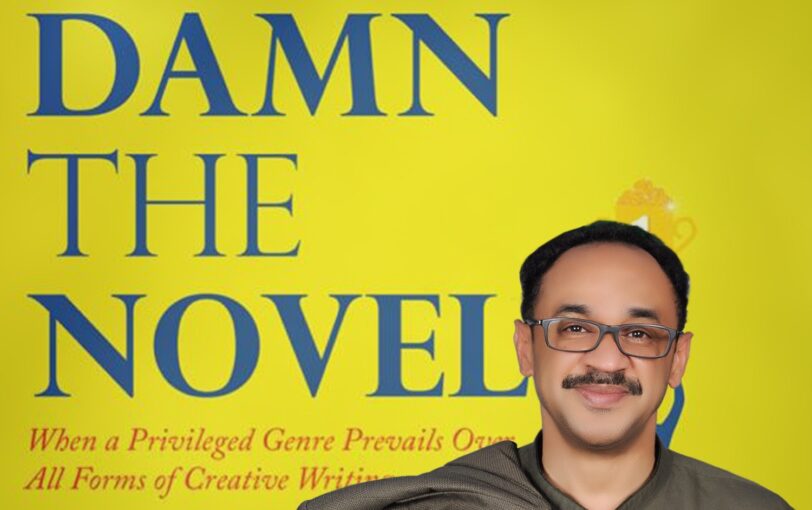
In a series of forty-five short essays that constitute his book translated into English under the title “Damn the Novel: When a Privileged Genre Prevails Over All Forms of Creative Writing,” Sudanese-born poet and essayist Amr Muneer Dahab denounces the privilege granted to the novel, the literary genre that is treated by publishers—and viewed by the public—as superior to all others and is virtually guaranteed marketability and profitability, to the detriment of others.
In this series of posts, the prolific author shares excerpts from the book.

This week: Chapter 35
Fire and Thieves
In my book O Writers, Be Humble, there is an essay entitled “What If You Missed This Essay?” It reads: “your path of life shall not be changed and nothing will happen and everything goes as it is. Opposite of what the writer thinks, imagination is unlimited. The writer thinks that printers shall not work if the intended essay does not arrive and so it will impatiently wait for it. Such imagination is pathetic because the chief editors are in fact humans. They do not wait for an idea to arise from the book to make the publication of a newspaper belated. Such deed is wise in itself and it is not necessarily motivated by jealousy toward a well-known writer. And so is the routine that governs the life of people. Life continues even if the writer stops writing for good, let alone a daily or weekly essay. Even the sky shall not cry a tear if that writer stops living and goes out to another world.”
That is a neutral (at least I believe it to be neutral) point of view. It’s just simply to say that the writer is excused if he considers himself (like everyone) to be the center of this world. For that reason, quoting from my book mentioned above continues: “But what if the human being in general stays still in a situation of denying the idea that he is not immortal? What if he continues to think that he is living on the hope that he is immortal and that he is the only one? In this case he will think that he is writing forever or at least something bad will happen if he stops writing or if his life stopped after all.”
Regarding the imagination of writers about the potential catastrophe if they stop writing or if one of their literary pieces isn’t published: such imagination is worthy of support if the catastrophe is limited to the writer himself. But writers like to spread their traces on the whole world, and that’s the point.
Even though I put into question that the writer himself will be demolished if one of his writings is stopped from being published due to a conspiracy or a setup, in that case the writer’s fear about losing his work is logical and accepted, as long as we omit the exaggerations imposed by the writer about his universal importance.
In a statement for the book Why We Write, Catherine Harrison said: “Before the coming of the hard drives I was holding a copy of my writing wherever I went. I could not leave my house without it. I thought then that if my house is burned my writing (the real house where I live) shall survive.”
In the opposite and during a statement in The Rituals of Writing Among Novelists by Abdennaser Eddaoud, the Lebanese novelist Hoda Barakat said: “Practically when we were running out from the house because of war, I wasn’t thinking of the script of my novel. I used to forget it. The bags that we used to hold consisted of mainly indispensable stuff, especially the needs of my parents. From time to time and during the mayhem of war I doubted that the script would stay still. I leave it and I am not feeling sorry for it. . . . Life for me is more important. But during the last exodus my work was well developed, and I brought my novel with me.”
In this respect, Barakat is different from the other writers who fear for their scripts. Even if life is more important, you rarely find someone who openly declares such truth, even if he is arrogantly describing the importance of (his route in) writing.
Barakat repeats in her statement that fact (which, itself, is simple, while being complex considering the daring of creative people to expose/declare it). She says elsewhere: “I write whenever and wherever I can, sometimes during pauses at work, or when my parents are not in need of my help. I work the whole day and I think my family is more important to me than writing; meaning that life is more important.”
Because we are mockingly criticizing novelists in this book, we will not lack the evidence to prove that novelists are the most obsessed, among writers, with their belongings before their script is published. Novelists themselves would not deny that this is an honor for them. They justify their claim that their literary work requires more attention before the completion of a complex process (writing the novel) that cannot be replaced in case it is lost or stolen. Poets, on the other hand, cannot feel the same since they have the ability to learn their poems by heart, so that they can reproduce them in case of any sudden losses of the original scripts.
In connection with such literary/artistic obsession, I remember a colleague whose fellows told me that he holds his “precious saving” in a bag that he holds wherever he goes, even if he is invited to a party or dinner with family. Obsession reached the level that this man held his bag between his legs during lunch, and if he wanted to wash his hands, he brought his bag to the toilet.
The weirdness of that man can be understood, considering the obsession of people for money. Most people consider the loss of money deserving of obsession much more than the loss of a unique novel or a wonderful collection of poems, so take it easy, dear writers.


Soumanou Salifou (administrator)
Soumanou is the Founder, Publisher, and CEO of The African Maganize, which is available both in print and online. Pick up a copy today!