

Ivorian police break violent protests against President Ouattara’s third run
BY LOU SIFA
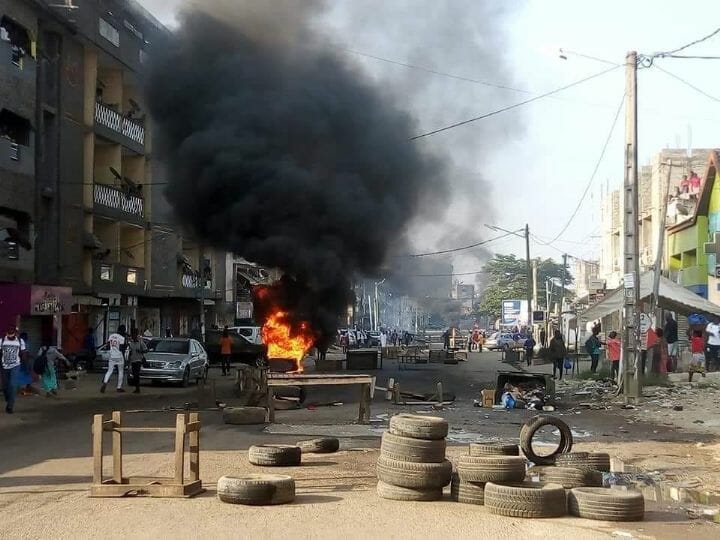
President Ouattara’s controversial decision to seek a third term has sparked violent protests across Cote d’Ivoire, resulting in several deaths.
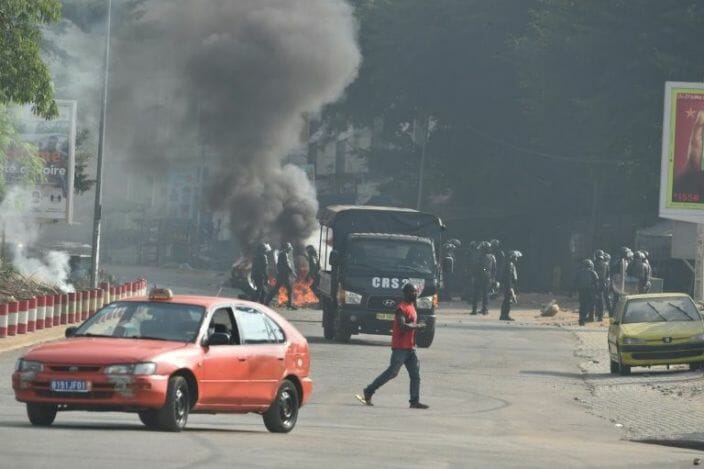
Crowds of demonstrators close to Ivorian opposition parties took to the streets yesterday Wednesday and again today to reject outgoing president Alassane Ouattara’s plan to stand for election on 31 October, which, if he is elected, would give him a third term in office.
For the opposition, the president’s plan to run for a third term violates the constitution. The constitution, indeed, allows only two terms, but the outgoing president, whose second terms ends in October, justifies his decision on the fact that the new constitution adopted in October 2016 resets the clock and allows him to run for two more terms if he so chooses.
Ouattara’s first mention in early June 2018 in an interview with the France-based weekly newsmagazine Jeune Afrique that the new constitution allows him two more terms, sent a shockwave across the political spectrum, making observers at home and overseas fear a repeat of what has been one of the obstacles to Africans’ quest for democracy: African leaders lingering on power. Some warned it would lead to violence, and the signs are pointing in that direction.
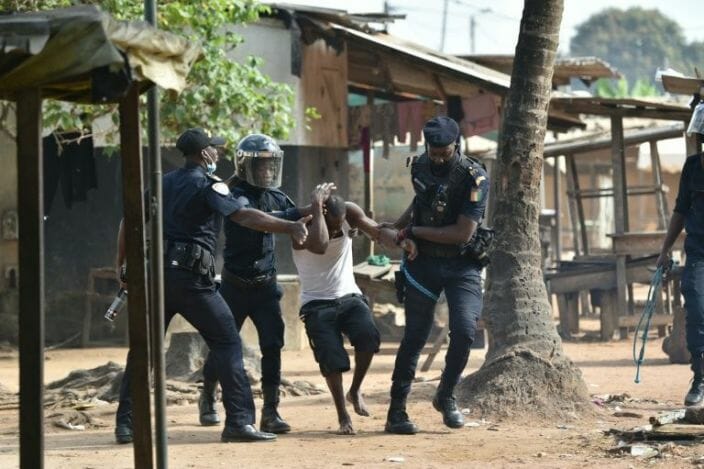
According to our sources in Cote d’Ivoire, clashes between demonstrators and those backing the outgoing president resulted in three deaths in the central town of Daoukro, the hometown of former president Henri Konan Bédié. The former president, whose party, PDCI-RDA, strongly backed Ouattara in 2011 during their collective efforts to force out then-president Laurent Gbagbo who stubbornly refused to leave despite losing the election, will challenge Ouattara in October. Similar demonstrations took place in other locations across the nation, with police stations ransacked by angry demonstrators in at least one town, Bonoua, the hometown of former first lady Simone Gbagbo. Our sources add that the demonstrations did not spare Abidjan, the nation’s largest city and economic hub where demonstrators erected barricades and burned tires. Our correspondent noted a heavy police presence in Cocody, the upscale neighborhood where most of the political elite, includimg President Ouattara, live. Politically-important and densily-populated areas such as Port-Bouet and Yopougon were also disturbed, with the police chasing down and teargassing the demonstrators.
In a communique read on national television yesterday, the minister of territorial administration, Sidiki Diakité, banned the demonstrations, which explains why the police moved quickly to repress the demonstrations and made dozens of arrests.
The fear felt in 2018 by some when President Ouattara, now 78, hinted about seeking a third term, seceded when, a year later, the outgoing head of state formally stated he would not run. Instead, his party, the Rally of the Houphouetists for Peace and Democracy, nominated his long-time assistant and protege, prime Minister Amadou Gon Coulibaly, to succeed him. Sadly, Coulibaly died of heart attack last month, which prompted the party to nominate its leader, Ouattara.
While these were not massive demonstrations like the nation has witnessed in the past, many fear the worse for a nation that is yet to heal from the wounds of the past, especially those from the 2002 uprising that split the country into two and resulted in hundreds of deaths, and the 2011 civil war triggered by Gbagbo’s reluctance to concede defeat that caused nearly 3,000 lives.

Gouza Nahounou, a political analyst of Ivorian origin who lives in France, squarely blames former President Bédié and former prime speaker of the parliament, Guillaume Soro, whom she feels are responsible for the demonstrations.
While former President Bédié is poised to contest the 31 October election against President Ouattara, the outgoing president’s other former ally Soro, a college drop-out who rose from obscurity and poverty to politics and wealth thanks to his role in the 2002 rebellion and the 2011 civil war, is in exile with an international warrant hanging over his head for embezzlement of public funds and attempt against the state.
Gouza Nahounou writes:
“To call for an insurrection is an attack on the republic. Mr. Guillaume Soro and Mr. Henri Konan Bédié, who are recidivist rebels driven by their perpetual thirst for power, set the country ablaze and have children aged 9 and 14 assassinated.”
She notes that “15 years ago Soro Guillaume’s rebellion was called MPCI, and that of Bédié was called MPIGO.”
Also: Ivorian political analyst Gouza Nahounou weighs in on the upcoming presidential election
The political analyst goes so far as to “call on the Ivorian civil society to sue Soro and Bédié for high treason.”
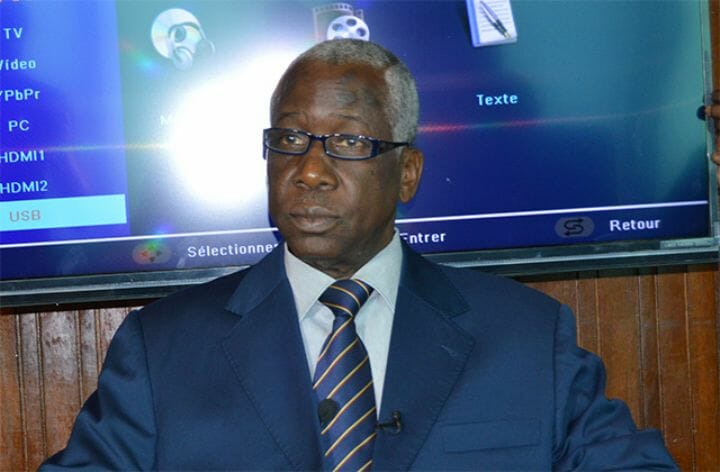
In a lengthy presentation published on the website of abidjan.net, a major online news source in Cote d’Ivoire, one of the country’s leading constitutional scholars, Professor Martin Bléou, states that President Ouattara’s bid for a third term does violate the constitution:
“The president of the republic, who has received two mandates, one in 2010 and another in 2015, could have claimed the right to serve for a third term, or even run indefinitely for president, but only on one condition: the removal, or simply the non-renewal of the principle of term limit provided for in the November 8, 2016 Constitution.”


Soumanou Salifou (administrator)
Soumanou is the Founder, Publisher, and CEO of The African Maganize, which is available both in print and online. Pick up a copy today!