

Thousands flock to Ouidah, Benin, to celebrate Vodun Days
BY SOSSA EHOVAHUN aka GUIDIMADJEGBE
Photography by Thiani Capo-chichi and the office of the president
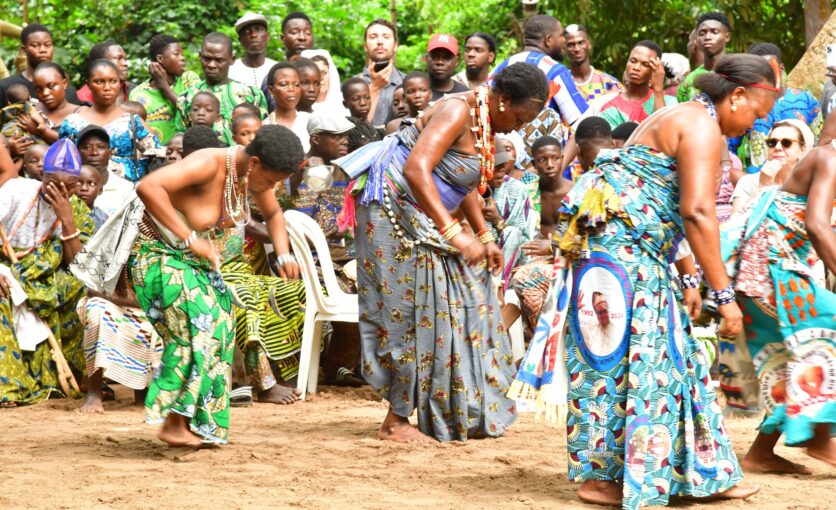
The third edition of Vodun Days, the Benin’s international festival that showcases the voodoo culture, was held January 8-10 in the historic coastal city of Ouidah, attracting thousands of local attendees and scores of African diasporans from the Americas and beyond.
Voodoo, a religion traditionally practiced in convents and other sacred places by its adepts under the control of its priests, is publicly shared during Vodun Days with the general public who don’t seem to have enough of it. Patrice Talon, the president of Benin, who takes pride in showcasing this unique aspect of Benin’s cultural contributions to the world, attended most of the various events that marked the three-day celebration, surrounded by his family and members of his cabinet.
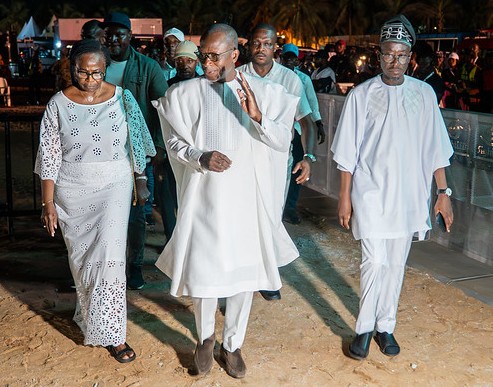
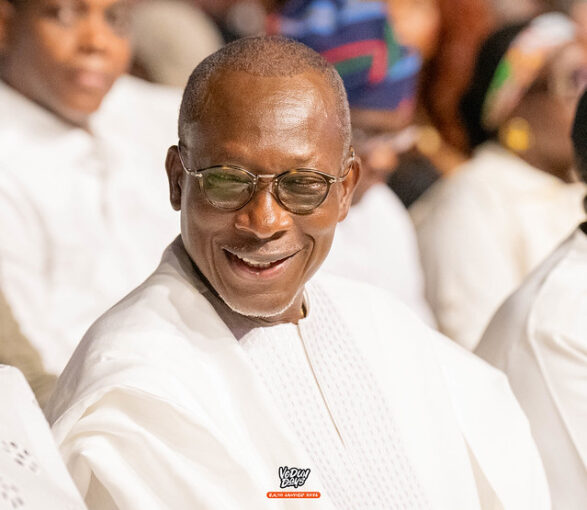
The ever-jovial, easy-going president was all smile during the events, clapping hands. In his kick-off speech on the first day, the president said, “On this occasion, I am pleased that the world can appreciate, through our rituals, dances, our adepts and our cultural expressions, the richness and the splendor of our ancestral tradition that is Voodoo.”
First held on January 9-10, 2024, the mega event reportedly brought together nearly 100,000 people that year. The number more than quadrupled the following year, with authorities estimating attendance at 435,000 participants. While there is no estimate yet for the 2026 edition, attendance has visibly shot up again.
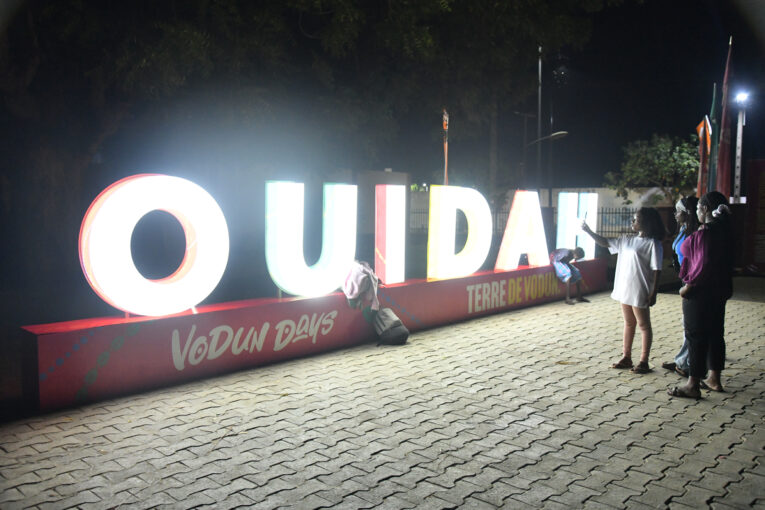
Vodun Days is not just a celebration of the voodoo religion created in the 17th century by the Dan-homê kingdom, one of West Africa’s pre-colonial military, political, and economic powerhouses that ferociously resisted the French colonizer; It’s a huge cultural festival filled with singing and dancing that attracts thousands of pilgrims and tourists to Ouidah, a city that proudly wears its mantle of “world’s voodoo capital.”
The fact is, Voodoo is not just a religion. Talon, the initiator/convenor of Vodun Days, defines Voodoo not merely as a religion, rather as Africa’s foundational philosophy, culture and identity. Sharing the views of scholars specializing in the subject, Talon characterizes Voodoo as a system of knowledge that encompasses art, music, cuisine, and pharmacopoeia, fueled by a deep, respectful relationship between humans, nature, and the creator.
Officials called this year’s Vodun Days celebration “the edition of maturity” thanks to the state-of-the art road infrastructure that has drastically changed the face of the city and beyond. A mega open-air concert kicked-off the event the night before the official opening on January 8, with several world-renowned entertainers that included five-time Grammy Award winner, Beninese-born Angélique Kidjo; African American star Ciara; and Nigerian-born African American star Davido.
The festive atmosphere that spread its wings over Ouidah and its vicinity was nothing short of bewitching. Very early in the morning of the first day of the festival, the majestic Vodun Village opened its doors to the public. Soon thereafter, the various venues of the captivating festival joined in, each offering various aspects of this unique Benin’s gift to the world.
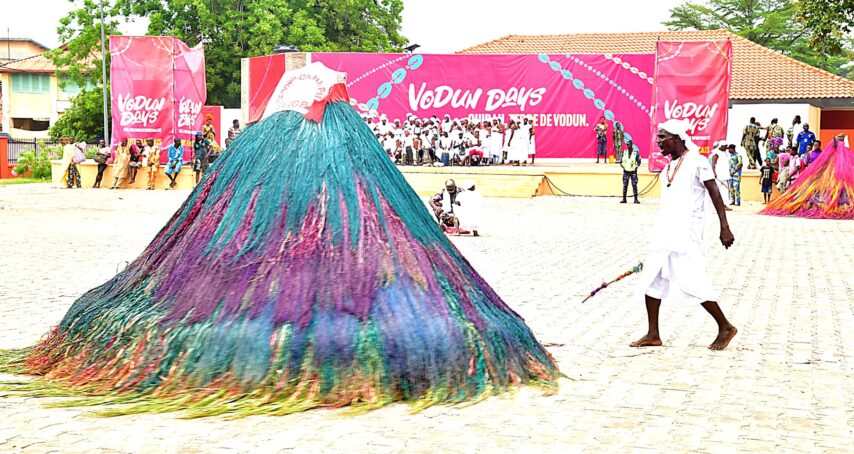
Zangbetos, the traditional voodoo guardians of the night who act as the unofficial police force that protect the community against bad spirits and malicious people, did their dance and performed the mind-blowing magic they are known for. Part of their magical performances consists in the sudden disappearance of the spirit that does the dance shaking the big cage made of raffia fiber, which results in the abrupt pause of the dance. To prove that the cage is truly empty, the Zangbeto priests turn the cage open, with nothing to be seen inside. Then follows a spiritual act—definitely not a magical trick a la David Copperfield—once the cage is put back in its normal position. Within a few minutes, that brings back the dancing spirit and the show resumes, amid the crowds’ cheers.
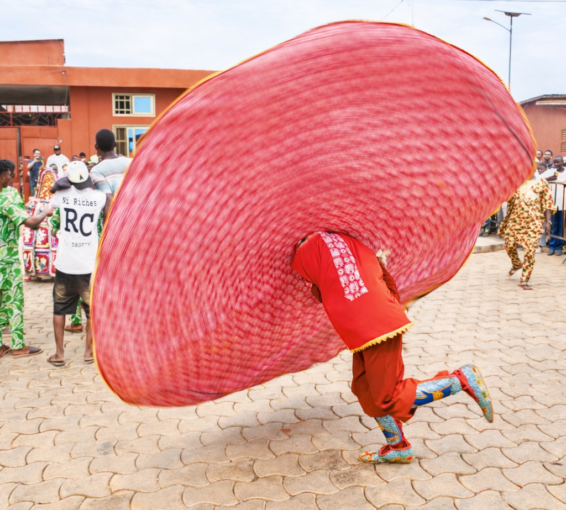
Egunguns, the spirit that embodies deceased people, also performed, clad in their extremely colorful outfits. The hugely feared spirits miraculous appear one after the other after the Egungun priests summon them by hitting the ground with an object. These being “living dead,” one could see the human shape, but their faces are not shown. Each performs its show, some more graciously than others, by design. In what is an exclusively man show—not unlike the Zangbeto—one Egungun in particular acts like a woman, walking just like a woman, drawing laughter.
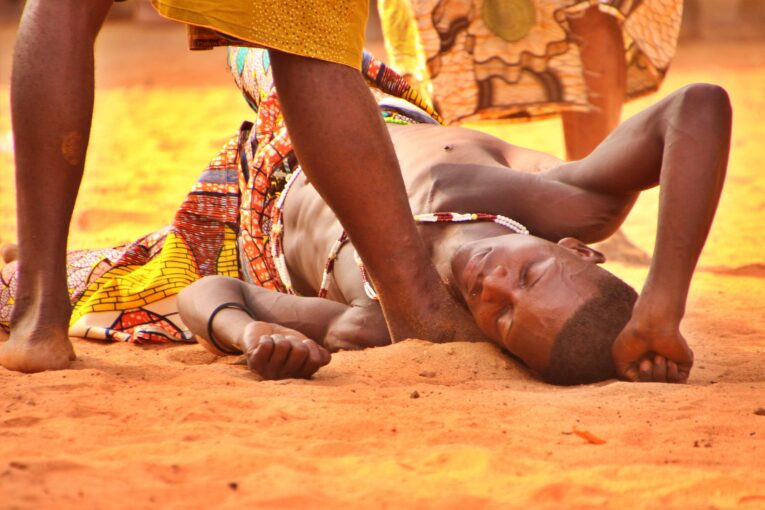
Trance ceremonies are another striking feature of the many events that make Vodun Days. It’s amazing to see the spirit enter the body of a voodoo adept, causing him/her to lose consciousness and become a spirit in his/her own right, able to perform healing, then become a human being again after a while.
In addition to all these cultural and artistic events, attendants were offered a rich selection of food, drink and snacks to buy throughout the days.
Vodun Days grew out of the previous one-day, annual Voodoo Festival held on January 10. That, itself, was an outgrowth of the Ouidah 92 Festival—actually held in February 1993—initiated by the then-President Nicephore Soglo, a man fully committed to promoting the local culture and bridging the gap between Africa and the African diaspora.
Sponsored by UNESCO, Ouidah 92 was intended to serve as a bridge between the often-suppressed history of slavery and Voodoo culture. The event brought to Benin scores of diasporan Africans, especially from Brazil and Haiti, two nations with strong remnants of the Voodoo culture.
One of the outcomes of Ouidah 92 was the creation of the memorial trail also known as the Slave Route, a 4-kilometer route that retraces the final steps of enslaved Africans en route to the new world. Successive Beninese presidents have tried to build on this particular aspect of Ouidah 92, but none of them has done so with the same determination shown by President Patrice Talon. Hence the attendance of scores—the authorities claimed hundreds—of diasporan Africans. “We will reveal to the world this Voodoo heritage so rich, so intense, so beautiful,” Talon already stated in his Plan of Action speech delivered way back on December 16, 2016, only months upon taking charge as Benin’s new president on April 16 of that year.

The choice of Ouidah to host Ouidah 92, and now Vodun Days, speaks for itself. Indeed, the historic town was home to the ill-famed slave port with its notorious Gate of No Return through which more than an estimated one million men, women, and children were sent into slavery.
Vodun Days, like Ouidah 92 and Voodoo Festival before it, stands as a tool to promote Benin tourism. Who can say more than this tourist? Click here to read more.


Soumanou Salifou (administrator)
Soumanou is the Founder, Publisher, and CEO of The African Maganize, which is available both in print and online. Pick up a copy today!