

The looming impact of the US-Israel war on Iran for Africa
BY SOUMANOU SALIFOU, FOUNDER/PUBLISHER
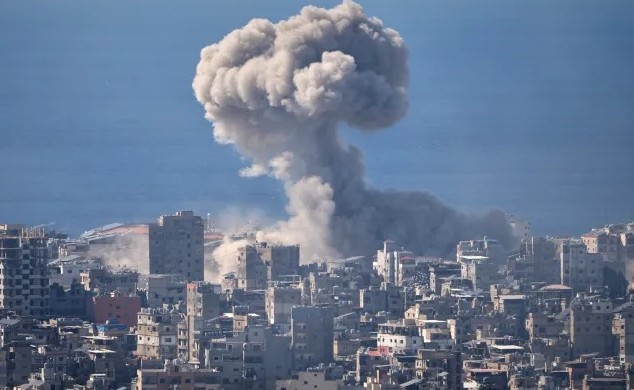
“When two elephants fight, the grass stands to suffer the most,” says an African adage. While the ongoing U.S.-Israel war on Iran gives Israel’s Prime Minister Benjamin Netanyahu yet another chance to delay his day in court to face charges of fraud, bribery, and breach of trust dating to 2019, and his comrade in crime, Donald Trump—the most irresponsible leader of our time—has no idea of the dangerous path he has thrown the world on, the economically-weak nations of Africa stand to pay a huge price for the war.
Though Africa is distant from the war zone and has taken no part in the war, it is not immune from the shockwaves of the raging conflict, owing to the continent’s deep integration into global trade networks and maritime supply chains. Indeed, with the war deepening as a result of Iran’s unexpected ability to continue to take the punishing strikes without its leadership crumbling so far, the African continent is the most exposed to the consequences of the war, especially the economic consequences.
Iran’s blockade of the Strait of Hormuz through which 20% of the world’s crude oil transits caused the barrel of Brent crude, the international benchmark, to climb by 2.5 percent at $105.70 yesterday, Monday, March 16, which is more than 40 percent higher than before the war began on February 28.
For the fragile African economies, most of which depend on imported fuel, the rise in the cost of gas at the pump will not only lead to higher transportation cost but also rocketing food prices and other ripple effects likely to cause broader inflation. Rama Yade, the Senegalese-born former French cabinet minister, now director of the thinktank the Atlantic Council’s Africa Center, raised the alarm by pointing out on X the “serious economic challenges” the rise in oil prices poses for many African governments, warning that it “could trigger social and political pressure.”
In the same vein, the closure, by Iran, of the vital shipping lane that is the Strait of Hormuz has already impacted the importation of fertilizers in Africa, an important agricultural input largely produced by Gulf states that boast cheap fossil gas and large amounts of sulphur. Fertilizer prices have gone through the roof since the war broke out, and experts warn that they are likely to increase food costs across sub-Saharan Africa. In an article about the war’s impact on the price of fertilizer published by The Guardian, Carlos Mureithi quotes Jervin Naidoo, a political analyst at Oxford Economics Africa, an advisory firm, as saying, “Any disruptions, any shocks really affect all of us.”
While Africans have nothing to do with an unpopular war started illegally by two men with criminal records, sub-Saharans are at risk of being pushed further into poverty because of it. [Even Trump’s director of the National Counterterrorism Center, Joe Kent, a few hours ago announced his resignation, raising concerns about the justification for military strikes in Iran and saying he “cannot in good conscience” back the Trump administration’s war.]
Sadly, African leaders have virtually no say in global affairs. They can vote on the U.N. Security Council but only as elected, non-permanent members with no veto power.
Not many African leaders dared cross Trump on his unjustified decision to start the war that has thrown the world into chaos. Exceptionally, South African leaders pointed out that “Anticipatory self-defense is not permitted under international law.” For his part, Senegal’s prime minister Ousmane Sonko warned that the situation is “extremely serious and the whole balance of the world that has been built over the last 50 years is compromised.”
Do African leaders fear the Maduro treatment? Arguably no. Although Trump shares the same anti-democratic stance of most—not all—African leaders who are still “winning” reelection at the age of 82 or 93 when even healthy men or women are unable to run anything well, let alone a nation, Trump prefers bigger fish like Maduro.
Even if Africa did have a say in world affairs, what good would that be anyway when European nations, which do have a say, have shown their weakness in the face of Trump, an erratic bully determined to tear the world apart? With global governance in the hands of one senile, sick man, the world has rarely been as unsafe as it is these days.


Soumanou Salifou (administrator)
Soumanou is the Founder, Publisher, and CEO of The African Maganize, which is available both in print and online. Pick up a copy today!