

“Damn the Novel!” An author’s cry against a privileged genre
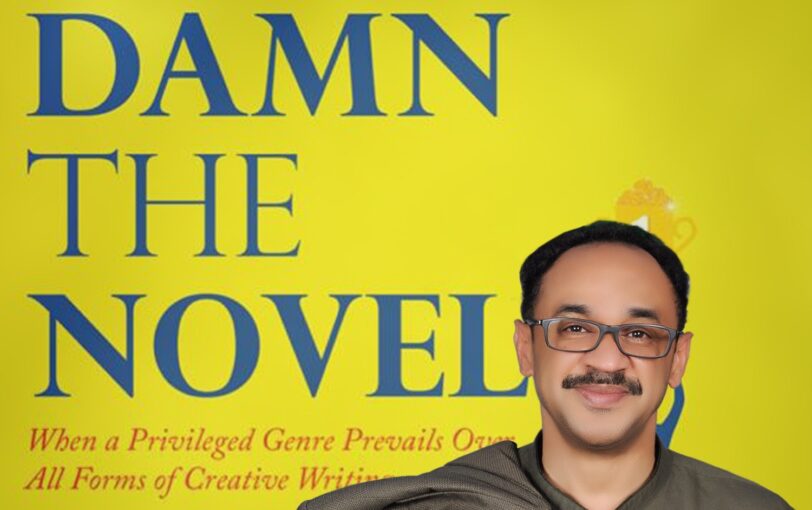
In a series of forty-five short essays that constitute his book translated into English under the title “Damn the Novel: When a Privileged Genre Prevails Over All Forms of Creative Writing,” Sudanese-born poet and essayist Amr Muneer Dahab denounces the privilege granted to the novel, the literary genre that is treated by publishers—and viewed by the public—as superior to all others and is virtually guaranteed marketability and profitability, to the detriment of others.
In this series of posts, the prolific author shares excerpts from the book.

This week: Chapter 38
Fame, Money, and Success
The interviewer: Do you think fame is devastating to the writer? If yes, then why?
Gabriel Garcia Marquez: Yes of course, because it is sweeping your private life. It takes your time you used to spend with friends, and your time you dedicate to writing. It tends also to separate you from the real world. The famous writer who wants to continue writing has to constantly defend himself against stardom. I do not like to say this because it is hard to believe, but I was hoping that my books would spread after my death, so I would not have to go through this long experience with fame. In my case, the only benefit I got from fame was my political advantage(s). Otherwise, I never feel comfortable. The problem is you cannot become famous throughout the day and you cannot say, “Well, I am not going to be famous until tomorrow” or press a button and say, “I will not be famous here or now.”
Marquez’s statement in an interview with Peter H. Stone was translated into Arabic by Mohamed Aldhaba in a book entitled Date a Girl Who Loves Writing. If Marquez himself did not correct/enhance his answer, I would say that it was merely an instance of self-esteem on the part of a superstar. Similarly, every artist (in whatever kind of artistic genre) keeps running in the steps of fame till he achieves it, making people run behind him, too; worst of all is when you see that the same eager artist gets bored (or even fed up) with a status he has been fervently seeking.
We all create, whatever one’s field of creativity is, and we always have fame in mind as a tempting destination. I almost want to say that we all walk among people, even those who do not have any kind speech to address the masses, inhabited by a certain will for fame. I am almost sure that this madness can only escape someone who cannot confront people because of social phobia.
Although we accused him, Garcia Marquez is very well balanced in his complaint of the notion of fame. Stardom is often devoured by the creators, who generally deny that fame has a taste or that they were once longing for it. However, Garcia Marquez continues to depress the “balance” of fame during the same dialogue when asked: “Do you have things that you aspired to achieve or regretted during your career as a writer?” Although the question has nothing to do with fame, Garcia Marquez responds with the previous answer: “I think my answer is similar to the one I stated lately, they asked me a few days ago how much I wanted to win the Nobel Prize, but I think this would be disastrous for me, I would be absolutely interested in it, but to win it? Because the problem of fame will become more complex, the most regrettable in this life is that I don’t have a daughter.”
Because our research here is not primarily related to the ethics of writers and creators, what we are focusing on is the technical aspect of fame—that is, the aspect of the creative entitlement to fame from a purely artistic point of view. Although not a few ineligible creators have gained fame, and a great deal of it, original creators/artists are not always described either as famous or nonfamous—but, instead, the deserved quantity/amount of fame.
“The amount of due fame” is always controversial, and it is not entirely wrong that some evaluate the amount of fame achieved as being the deserved amount, since fame is not synonymous with artistic eligibility or success, though it is equivalent to what people like when (they notice that) some humble works reach fame regardless of any deserved critical success. It is obvious that the peak of fame everyone dreams of is the combination of the two achievements: high aesthetic value and overwhelming public renown. Gabriel Garcia Marquez mentioned above is one of the wonderful examples in this seemingly narrow section.
In the Arabic version of the book Why We Write, Mary Karr, an American writer and essayist, says: “Before I became a college professor, I ran a bar.” She proceeds: “I had a very funny trade career in telecommunications. At the beginning of my break from drinking, I was on duty as a magazine editor and I received payment. I started teaching while I was pregnant with my son, who is now twenty-five . . . I continued to write essays for the Harvard Business Review. This work did not develop my writing abilities but it enabled me to make a living—to keep breathing.
“I have not been able to pay the mortgage from the revenues of my books,” Karr continues. “The myth that you get a lot of money when you publish a book is totally wrong, unless the book has a popular exceptional success. I have always told people that I am a poet if they ask me what I do, and that is what I have been telling them so far.”
Although Garcia Marquez’s relative balance in his statements about stardom is clearly marked by me, Karr seems more truthful and closer to the heart. I hope that I do not look here like someone who is not comparing—as the famous English saying goes—apples to apples. I would be satisfied if I am doing a further complex comparison between a famous apple and another less famous apple.
The question here is: Can we consider Mary Karr to be a successful writer, although she is far less well known than Gabriel Garcia Marquez? The answer—unlike Marquez—is that she is successful for the quality of what she has written, provided that we exclude commercial prosperity and materialistic returns from judgment. “No one really knows how to sell books, the whole style changes and no one knows how to make money from this work in any secure way,” says Karr, without claiming—as we have just done—that she is a successful writer. She continues: “To publish a trivial book selling three million copies of a hardcover, and then you never show up again. All the energy and enthusiasm (at least from the part of publishers) are directed to those popular books for being most beneficial over a short period of time (in the market of books).”
In his book The Author, Andrew Bennett says: “In short, we can say that works (literary products) with commercial value were lacking aesthetic value. . . . The idea of the sublime literary work is that the work was aesthetically valuable because it was worth nothing on the material phase, this was a new idea during the eighteenth century. . . . In the eighteenth century, however, this authoritarian ideology dominated the institution of literature and began to define a particular concept of authorship,” says Bennett. He continues: “Eagleton is mocking how the portrayal of art, the artist as an independent person, which emerged when ‘the artist descended to a petty productive level of a commodity,’ can be understood as being associated with some ‘spiritual compensation’ for the insult and humiliation felt by a person writing for getting paid. It is paradoxical that this puzzling concept of the author as above all commercial considerations, is precisely what makes his work capable for economic and commercial development.”
How the eighteenth century was merciful to the aesthetically successful authors! But at the same time it was hard on the pockets of who were qualified—even within that category of authors—for commercial sweeping success.
Apart from my own personal interest, the novel was received at the expense of other literary genres and because of that extra interest in particular. Today’s novel seems to be the literary genre that qualifies for the achievement of artistic and commercial success, but unfortunately it hardly stands up to achieve that equation, even with its most prominent writers (or both). In most cases, it tends to draw the scale of commercial success for the purpose of spreading. It was the strength of money and fame and commercial success at the expense of artistic/creative value and all that fall under the title of “literary success,” a term capable of tickling the dreamy feelings of those unpopular original creators in any field of creativity.


Soumanou Salifou (administrator)
Soumanou is the Founder, Publisher, and CEO of The African Maganize, which is available both in print and online. Pick up a copy today!