

“Damn the Novel!” An author’s cry against a privileged genre
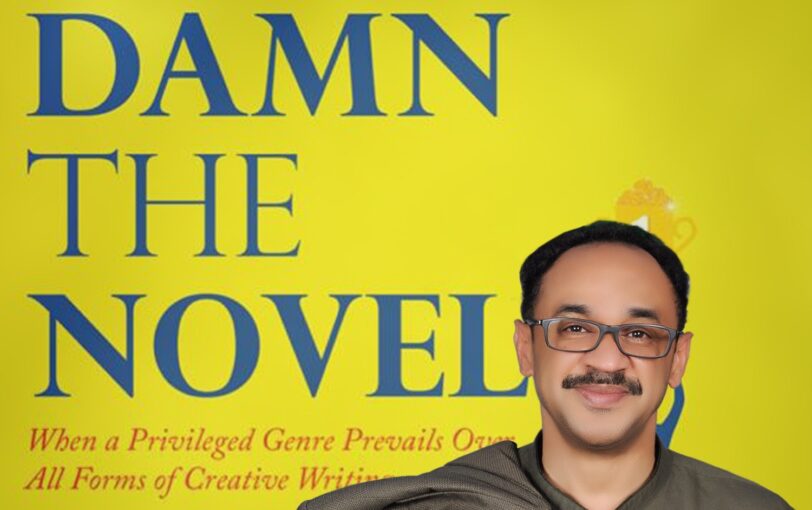
In a series of forty-five short essays that constitute his book translated into English under the title “Damn the Novel: When a Privileged Genre Prevails Over All Forms of Creative Writing,” Sudanese-born poet and essayist Amr Muneer Dahab denounces the privilege granted to the novel, the literary genre that is treated by publishers—and viewed by the public—as superior to all others and is virtually guaranteed marketability and profitability, to the detriment of others.
In this series of posts, the prolific author shares excerpts from the book.

This week: Chapter 28
From an Essay to a Movie
Some of those who did not like the noisy debates following The Clash of Civilizations and the Remaking of World Order by Samuel P. Huntington around the mid-1990s—the book whose fame reached the furthest cultural horizons not only with the part concerned with political science—point out that it started as an essay which its writer “fattened up” when he saw the reactions it triggered, and then it evolved to become a book which occupied people’s minds around the globe for a while.
Logically, a book with great traces such The Clash of Civilizations should not be disgraced because it evolved from an essay, for two reasons: First, the author himself was not born great but started with few books that had relatively modest influence; the author’s first experience as a writer and as an academic scholar did not necessarily indicate his emergence as a greatly influential thinker within a few years. Confessing the greatness of a person does not necessitate having that person brought up great or born with lineaments of greatness. The second reason, the most important one in the context of the essay genre, is that the essay from which the book evolved is one of the literary arts. It is disgraced only because the lovers of literature (and its creative writers) prioritized a literary genre throughout long eras: poetry or the play, the story or the novel, etc. Additionally, people prioritized those genres over the essay, considering the latter to be a genre living on the margin of creative writing and sometimes totally outside literature, especially when it comes to criticism assessing literary genres that take, most of the time, the form of critical essays.
Disgracing a book because it has evolved from an essay resembles defaming a collection of poems because it evolved from a poem. Extending the comparison range from what is mentioned above, it resembles defaming a man because he evolved from the child he used to be.
But for more preciseness in comparison, we should be aware that the essay is not a child within a huge book that contains a group of essays. The most precise consideration in this account is that a book consisting of mature essays is a tribe that contains a crowd of reliable, fully fledged men. Back to the closest example, an excellent/powerful poem is not a baby-child in the poet’s collection, but a mature work standing next to other mature works, shoulder to shoulder.
Perhaps what has acted against the essay in the hearts of the public and specialists in the arena of literature and writing is the wideness of its form that accommodates all that pops up in everyone’s mind, inking them on paper so that people can read. The essay then was so big-hearted that people underestimated it, unlike what they do with the other genres. Actually, they don’t dare trying the other genres because it will be necessary for them to acquire dexterity in rhymes and mastery of narration techniques—skills comparatively out of reach.
In another essay, we stated that the greatest lesson of artistic ecstasy comes from looking forward to “infinity” without constraints. As for the essay in this context, its value mustn’t be assessed based on the number of writers who dared to disgrace it, or, to soften the expression, with the number of those who accept that they coexist with it. Instead, essays should be evaluated by the ultimate artistic terminus where masters of essay writing, lovers of “nonstop races,” lead eager readers to utmost destinations of artistic/literary value and pleasure.
The most eminent manifestation of disregarding the essay’s positive effect on literature and thought in general is that writings and books of criticism, thought, and even academic studies in different areas (especially books that can be divided into chapters and sections) are in fact based on the essay, which can be shortened or prolonged according to the nature and objective of the writer, and according to the requirements of each chapter and section. In fact, no one cares, be it a critic or whoever, to name the art that accommodates all these writing genres, but instead they just refer to it as a book or as research. Actually, it must be confessed that much of literary criticism includes as much pleasure and usefulness as the literary piece of work being explored. Besides, a considerable percentage of essays that stem from books of great criticism and thought do not come only as a mere echo of literary work and life issues. Rather, these essays open new horizons for life and literature alike. This of course can be regarded as a subset of the point about the power of the essay form. In fact, criticism is most often an original instance of creativity that inspires and provokes other forms of writing, and this is one of the essay’s forgotten merits/graces.
In the West, the situation is not that much better when we consider valuing literature based on the illusion of the hierarchy among different literary genres. As we saw in a previous discussion, the short story nowadays has no market in the U.S. compared to the novel. But the situation there is still relatively better in terms of regarding the essay as a literary genre contrasted to the situation in the Arab region. The problem in the Arab world emerges when considering the essay as being in the margin, not standing among the literary arts shoulder to shoulder, regardless of the flourishing “fashion” that makes a genre superior over other existing forms. Most shockingly, in most cases this supposed hierarchy is developed without regard for the artistic attributes of the pieces of work, unlike what the enthusiastic supporters of a prevailing literary “trend” throughout different eras think and claim.
We previously showed how producing a movie out of a novel makes novelists jubilant, and they are happy to include it as the most glorious achievement of their literary experience in their biographies. Regardless of the question of which one is more worthy of being applauded: the novel that is turned into a movie or the movie that derives from the novel (the question indeed needs much detailed analysis)—turning a novel into a movie is a testament to the success of the novel, whatever our attitude in answering the question of which genre should be considered the most sublime.
Thereby, the West deserves double appreciation for their valuing of the essay, considering that the latter can manage to inspire the cinema industry to turn an essay into a movie. This happened with the American author Susan Orlean and her essay “Life’s Swell,” which served as the basis for the movie Blue Crush.


Soumanou Salifou (administrator)
Soumanou is the Founder, Publisher, and CEO of The African Maganize, which is available both in print and online. Pick up a copy today!