

“Damn the Novel!” An author’s cry against a privileged genre
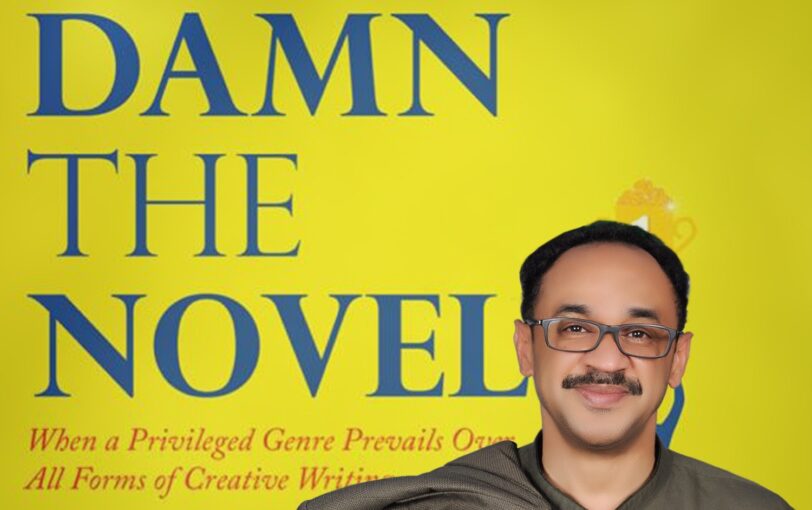
In a series of forty-five short essays that constitute his book translated into English under the title “Damn the Novel: When a Privileged Genre Prevails Over All Forms of Creative Writing,” Sudanese-born poet and essayist Amr Muneer Dahab denounces the privilege granted to the novel, the literary genre that is treated by publishers—and viewed by the public—as superior to all others and is virtually guaranteed marketability and profitability, to the detriment of others.
In this series of posts, the prolific author shares excerpts from the book.

This week: Chapter 22
Between Al-Aqqad and Mohamed Kotb
New ideas do not spread just because they are great. There must be some powerful minds to defend them. And it is very common to have an untrue idea become widespread and invade other concepts in the market of reason just because a prominent thinker (celebrity) decided to confront others through spreading and granting support. However, judgment on the truthfulness of ideas is not conclusive. In literature, as in other aspects of life, there are no such true and false routes. Instead, there are desired destinations and undesired ones. And in most cases, the attitude of people negatively changes toward this path or other when a destination is judged according to their natures and passions. So, every method of thinking and feeling should lead to fruitful outcomes if people resort to wisdom as a basic tool of investigation.
A thinker or a man of letters will not dare to oppose the above statement when it is said without naming a genre. But practically, it seems that all thinkers and men of letters are rigidly adamant, to differing extents, when it comes to assessing the fruits of their minds. Indeed, in this they resemble all craftsmen. Even scientists in their highly specialized laboratories may feel the same and may resort to the party that supports their trend for granting good judgment for their desired scientific finding. Or they may do so to eliminate rivals not because of lacking competence but just because of purely emotional motives.
The controversy of “what’s the prevailing genre of this era?” will not reach any decisive conclusion if we are seeking an answer that satisfies everyone—an answer that includes a single genre based on a mere logical introduction. And controversy is not supposed to end up with a consensus of opinion among all people by simply accepting the result. Still, people’s obsession with their devotion (practitioners and audience alike) will not end when such eliminating procedures are implemented to satisfy the appetite for victory of the desired genre or art. This way of judging becomes more inapplicable, especially in the time of intellectual shifts where people are not intellectually stable in regard to their beloved genres—swinging side to side under the winds (of change) coming from different directions and perspectives. Perhaps they may keep up with the wind of the opposing party while holding the breath of a genre dwelling within the public conscience for decades or centuries.
The points of view of the Egyptian thinker Abbas Al-Aqqad (preferring poetry, rhetoric, and prose over the story), which we have discussed in many of the above paragraphs, have triggered considerable reactions because of the status of Al-Aqqad himself along with his abilities in handling controversy. However, the fact that he vowed his preference for a genre and devalued another caused the flare-up, too. On the other side, followers of the debates following the publication of In My House see that the opponents of Al-Aqqad expressed their opinions wisely and peacefully compared to Al-Aqqad’s intense replies. Still, in some of his replies, though he tried to explain what he meant by his judgment (issued without constraints) of preferring poetry, rhetoric, and prose over the story, the ill pride of the first opinion is still inundating him, such that he again sharply confirmed his first choice.
This time, the Egyptian writer Mohamed Kotb and Professor Ali El Ammari thwarted Al-Aqqad. Of course the name of the first is memorized in the minds of successive generations, unlike the second, whom Al-Aqqad used to address as “the virtuous scholar.” Ali El Ammari—or “the virtuous scholar,” as Al-Aqqad addressed him—was a teacher at Al-Azhar University.
In the Egyptian magazine Al-Risala, volume 635, Al-Aqqad starts his article with shedding more light on the example that he presented in his book about privileging poetry over narrative fiction. And this example is likely similar to the example of iron and gold. Then he concluded: “We preferred poetry over storytelling in the context of dealing with both of them in my book In My House. All that we have said is that poetry is more precious than the story; and that the incomings of fifty pages of sublime poetry is more abundant than the incomings of the same sum of pages of narration. So, it shouldn’t be said (mostly referring to the comment of Mohamed Kotb) that the story is indispensable, and that poetry cannot be substitute for the story, and that extending and preamble are two necessities of explanation novelists (story writers) have no way into.”
Al-Aqqad’s logic whereby he summarizes his advocacy in favor of poetry over the story is flimsy. This is because it is known that he once censured through poetry and prose what he termed “the fairness of rhythms”; but he is now showing up that type he disapproved of in the types of fairness when he compares fifty pages of poetry to fifty pages of narration. What is more unfair is that he bases the comparison on the products of two completely different genres to be judged by “the rhythm” that governs the production of fifty pages within both of the two genres.
So, it is not strange if Kotb seems calmer and wiser in the following quote that he wrote to refute Al-Aqqad: “The story is a psychological study that is essential to understand the secrets of human selves. Storytelling can substitute for poetry, criticism, prose or even rhetoric; because it is in itself one of the elements that readers need.” Kotb continued, replying to Al-Aqqad’s attitude based on the gold and iron notion, portraying poetry and narration relatively: “Iron is a useful mineral for making machines and building houses. Gold or silver or any precious jewel cannot replace it; because it (iron) is simply one of the metals that we need in peace and war, industry and commerce.”
The above words of Kotb are sagaciously formulated in reply to what Al-Aqqad stated. But Al-Aqqad, when defending his opinions, besides that one when starting the assault, did not stay helpless in the face of a comment, no matter how wise and true it was. Controversy (especially the intellectual one) relies mostly on the ability to tolerate different points of view based on the arguer’s talents and abilities. It specifically needs patience when the arguer moves away from holding a logical stance, especially if the issue is listed under the category of “potentially having different interpretations.” And indeed, every intellectual and literary issue is mostly included within this category.
Kotb proceeded with the same reasoning and quietness, even adding some gentleness toward Al-Aqqad when he said: “I have read Sara [a novel by Al-Aqqad] and got in touch with the poetic dimensions in Al-Diwan [a poetry school he founded with Ibrahim Al-Mazny and Abdel-Rahman Shokry]. It is good and sublime poetry. But I cannot say that it can substitute for reading Sara, or that Sara did not contain anything new about deep psychological introspection.” Despite this, some critics claim that Sara does not fulfill all the standards of a good story or novel. Indeed, some see that this story of Al-Aqqad’s is only a mere study or a long essay about psychology.
Al-Aqqad did not give up, even after that gentleness of Kotb, but he became more insistent to do what he had prohibited in “fairness of balances/scales.” But this time, he increased the “scale”: he raised the number to one thousand pages instead of fifty. “This is the camel and this is the cameleer,” as we say in our national proverbs: “Bring me one thousand pages of a novel or many novels and take one thousand pages of sublime poetry; then check the readers’ judgment about what they felt after reading both the poems and the stories.”
Al-Aqqad, in his reply to El Ammari, followed the same method of insisting on the first opinion with a kind of deference toward the opponent. As for my opinion, I think all that resulted from Al-Aqqad’s approach in his long essay is what he mentioned in the conclusion of his reply to Kotb. Actually, it can be described as a retreat even if it is not clearly stated, but simply clarified what his views meant in the beginning. Anyway, he insisted again on concluding his inexplicit retreat with the example of iron and gold: “In fact, I did not write what I had written about the story to nullify it or to prohibit writing it, or to negate that it is a reliable literary work for a talented writer, but I wrote that to say I get more poetry collections than stories for my bookshelves. I say once more that the story is not the only creative activity that is credited to writers. Besides, it is not the only fruit that literary faculty can produce, and that having it as a medium of psychological analysis or social reform does not make it a firmly fixed phenomenon to be embraced by all writers; and the peak of talk about it is the same as the peak of talk about gold and iron (as mentioned in the source): ‘iron is useful in factories and houses, but it is not bought for the same price as gold in markets.’ ”


Soumanou Salifou (administrator)
Soumanou is the Founder, Publisher, and CEO of The African Maganize, which is available both in print and online. Pick up a copy today!