

“Damn the Novel!” An author’s cry against a privileged genre
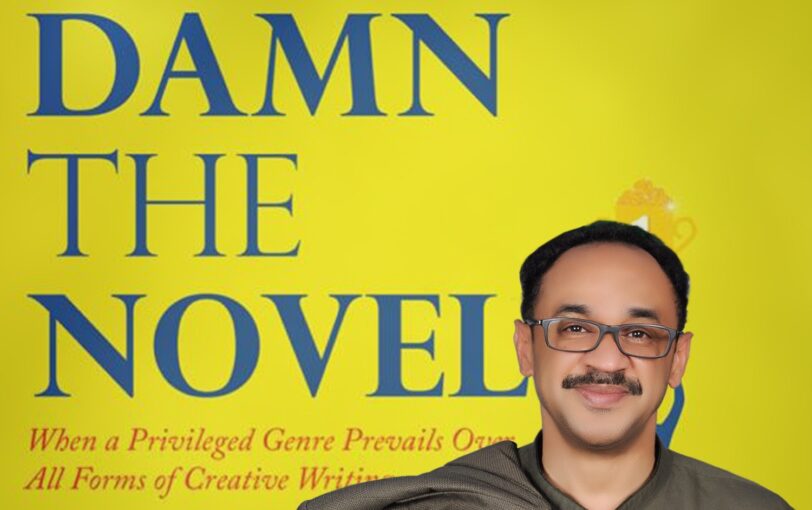
In a series of forty-five short essays that constitute his book translated into English under the title “Damn the Novel: When a Privileged Genre Prevails Over All Forms of Creative Writing,” Sudanese-born poet and essayist Amr Muneer Dahab denounces the privilege granted to the novel, the literary genre that is treated by publishers—and viewed by the public—as superior to all others and is virtually guaranteed marketability and profitability, to the detriment of others.
In this series of posts, the prolific author shares excerpts from the book.

This week: Chapter 20
A Gift from Al-Aqqad
Relating to literature, in the Arab world at least, it seems that people were bolder in expressing their points of view seventy years ago than they are nowadays. What we showed earlier about the reaction of the “young” writer Naguib Mahfouz in 1945 to Abbas Al-Aqqad through the pages of Al-Risala includes very plain allusions. These allusions revealed Mahfouz’s advocacy for the story was not less fervent than Al-Aqqad’s affection for poetry. When I compare that with the rising debate about the invasion of the novel in the last decade, I find that the two opponents are more reserved (disciplined?) in expressing their opinion. Those who seek victory for the novel are repeatedly claiming they don’t have any “negative” feelings toward poetry or any of the other arts. On the other hand, those who still believe in the ember of poetry or even the short story, for example, are defending their art with bashfulness. They actually confined their timid needs to just being given the chance for their art to appear; they considered it to be beautiful and useful but not as powerful a candidate for “bestselling” lists as the novel is. If not in an absolute way, it is at least in submission to the circumstances of this era. (We saw this in Al-Risala in the words of Naguib Mahfouz who claimed that the novel was the poetry of the modern life at that time, or even that the story had gained absolute control over all the existing creative forms.)
Being reasonable methodically and intellectually at debates is actually required, but it is not wise at all to declare submission in front of the dominance of a general tendency suggesting that another trend is worthy of being granted privilege and power. So, the controversy about “literary supremacy” has existed for ages, though it seems to have been more fervent and overt than it is now.
The debate/controversy of Al-Risala magazine about the preference between poetry and the story, which did not stop at the reply of Naguib Mahfouz, was triggered by Al-Aqqad’s opinion at the beginning of his book In My House. We quote here a paragraph of an imaginary dialogue of Al-Aqqad with a friend of him wandering in his personal library: “Then he went wandering with his sight as a bird while he said: The shelves dedicated to containing stories are so small! I said: Yes, and I won’t mind if they become even smaller; because I, very frankly, do not read a story when I can read a book or a collection of poems. And I don’t think that the story is the best of what minds have ever produced. He said: How? Aren’t there genius story writers and novelists similar to those who master poetry or any other literary art? I said: Indeed there are, but the genius fruits (of the tree of creativity) are of different levels anyway. And the novel may be more fertile and intuitive than the eloquent poets. But after all, the novel remains inferior to poetry and criticism, rhetoric and prose. I am going to give you an example likely to clarify the case: the garden that grows apple tree does not need more fertile soil than the garden that grows sycamore and shallots, but sycamore and shallots are not better than apple even if they may grow in a more fertile soil.”
Apparently, that was not the first manifestation of controversy about the priority of literary genres at that time, but it seems to be the most prominent one and the most well directed, which is why we presented it here along with the replies it brought about. The same issue now being debated seems to lack a great deal of dauntlessness and directness.
I am interested that Abbas al-Aqqad does not only prioritize poetry over the story but also over criticism, rhetoric, and prose. I highly value this instance of intellectual audacity from the great Arab thinker. I thought myself to be top-notch in my objection to the novel through encouraging poetry and the essay to persist in the long race to the literary podium. It is now apparent that the game of literary genres has somehow changed its rules. The story used to be the winning party against poetry and “rhetoric prose”; but it is now the weak party facing “Mother Novel” (we saw earlier that the mother can somehow be the begotten of its offspring). Wikipedia states: “Starting from 1945, Naguib Mahfouz began his writing of realism fiction that he kept throughout most of his novels including Alqahira Aljadida, Khan Alkhalili, and Zoqaq Almidaq.” Even though his first novel was published more than five years earlier than his debate with Al-Aqqad, Mahfouz probably wrote his reply when he was a storyteller more than a novelist. We will see that novel supporters, running out of the logical arguments for preferring the novel, turn back to reformulate the defense that the case is not only about the novel but about all narrative forms.
In the midst of the absence of a persisting revolt against novel despotism, and despite the difference between the two eras, the points of view of Al-Aqqad—as seen in his book In my House and his following comments confirming his attitude toward the story on Al-Risala, and perhaps in other places—seem to me (I’m quoting from football this time) like a penalty gifted by the great thinker (referee). This gift can be useful, with double chances to score a goal against the devotees of the novel. But I would rather deliberately lose this rare free kick (existing throughout different generations, as we saw) for one simple reason: the great thinker started his campaign against the novel because he preferred poetry over it, while I commit my “friendly” campaign basically against despotism of the novel or of any other literary art. I am unconcerned with the question of which should prevail—a question probably having no definite answer. Literature has a unique ability to bestow an original flavor on all its genres, one that can’t be tasted through beholding other genres, regardless of how dominant or widespread they are.


Soumanou Salifou (administrator)
Soumanou is the Founder, Publisher, and CEO of The African Maganize, which is available both in print and online. Pick up a copy today!