

“Damn the Novel!” An author’s cry against a privileged genre

In a series of forty-five short essays that constitute his book translated into English under the title “Damn the Novel: When a Privileged Genre Prevails Over All Forms of Creative Writing,” Sudanese-born poet and essayist Amr Muneer Dahab denounces the privilege granted to the novel, the literary genre that is treated by publishers—and viewed by the public—as superior to all others and is virtually guaranteed marketability and profitability, to the detriment of others.
In this series of posts, the prolific author shares excerpts from the book.
This week: Chapter 2: Coming Late Across Tayeb Salih
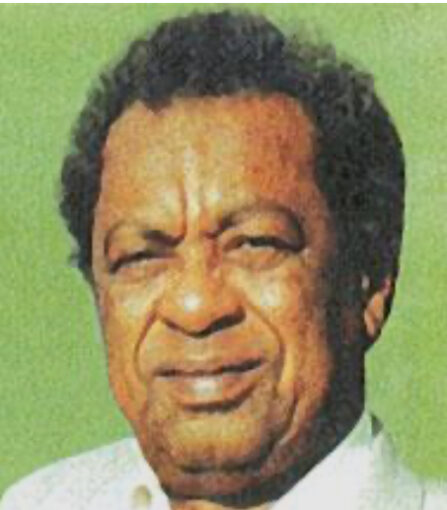
Twenty years or more ago, when I was a young man, driven by fondness for Arabic classical verse—to the extent of believing it to be the one and only literary genre worthy of reading and writing, rather than by apparent sensitiveness about novels—I used to see in Tayeb Salih merely that outstanding Sudanese literary figure who should have been a poet, not a novelist.
After I broke up with poetry in a smoothly refined manner, I did not seek to engage myself in any form of the arts of fiction. Thus, my “allergy” to the novel, the prevailing trend of the time, has never faded. Shifting away from the shores of verse, the novel has never been a choice, since I opted for essay writing as an alternative destination. Similarly, I continue to view Salih as someone who merits deep esteem for his notoriety both in the Arabic region and all over the world—not merely for his novelistic charm.
It is surprising that my praise for the man’s particularity and genius, which I came across late, was not based on his peculiar talent as an essayist. It was not his columns that could bridge the gap between me and his novels; but, unexpectedly, it was his very novelistic repertoire, and precisely his best-known piece of all his work, Season of Migration to the North, that led me to his fiction.
Honestly, what attracted me to this unique novel was not merely its style, or what some described as a land where prose and verse coexist, but rather the way the web of its narrative structure was constructed. In this sense, what I liked the most in Season of Migration, the phenomenal fiction, was the very narrative phase. This fantastically built piece of work should be regarded, at least by me being a Sudanese citizen, as more than mere exceptional workmanship. It is thanks to Season of Migration that the Sudanese novelist is significantly renowned worldwide. Most masterpieces have purely artistic strengths worthy of esteem and admiration. In the same vein, unique and new styles can constitute a supplementary reason, even for those who are not used to the conventional style in novels, to read, or even become addicted to, fiction. Additionally, the bold idea and the audacious approach are two other creative ingredients rendering Season of Migration, along with its author, worthy of appreciation and estimation.
By the same token, I kept the same inverted logic that governs my outlook on literary genres when it came to Tayeb Salih, whose essays appeared to me as worthy of affection, though their charm seemed to have been simmered on a low heat—a charm not besieged by an aura of majesty like that characterizing the novelistic genre. Salih’s articles have earned well-deserved recognition for their simplicity, rather than their grandeur—which is especially important given the recession and poor reputation of the product in question (the essay) within the field of creative writing.
Tayeb Salih the essayist, at least as far as I am concerned, is not inferior to Tayeb Salih the novelist; however, there still exist numerous prominent critics (not only devoted literary lovers) who are entangled in a reading process obsessed with a hierarchical point of view. On this basis, they are always concerned with listing literary genres according to an ordinal order they advocate, and not according to a categorization that approaches literary pieces of work, or any other creative form, based on their merit, regardless of the genre they belong to.
Tayeb Salih is an eminent columnist who realized from the very start that essay writing is an independent creative practice that is not, by any means, inferior to novel writing. Thus, being inhabited by the same passion of an artist eager for inspiration, he would get immersed in a writing experience that incorporated the two genres on an equal footing. He used to receive questions like, “Why did you quit writing?” He would answer, “I still write articles in newspapers, magazines, and books.” His response is, of course, disappointing, or even provocative, for those who are fond of the idol that tops the proclaimed literary hierarchy.
However, the great writer, who’s great because of his feel for art and life and not because he’s achieved status after the publication of a novel or two, has always been conscious of his primary mission: spreading the wings of his creativity, whatever his literary garment (a novel, a short story, or an article). As for classical poetry—one of Salih’s devotions—the man did not take the risk of defying the complications of rhyme and rhythm. He simply chose to deal with verse as a connoisseur, not more. Furthermore, being deeply honest with himself and with others, he even ceased to write novels, the raison d’être of his triumphant writing experience, once he felt that his words were created spontaneously as essays.
Accordingly, I would say, without exaggeration, that Tayeb Salih always treated life as multiple instances of creativity manifested in every possible way. Thus, most of the man’s intimate meetings, attended by friends and passersby alike, were a fountain of unprompted innovation—an original process of creation independent from (and not inferior to) both novel and essay writing, though being unmanageable when it comes to putting them into written (creative) texts.


Soumanou Salifou (administrator)
Soumanou is the Founder, Publisher, and CEO of The African Maganize, which is available both in print and online. Pick up a copy today!