

“Damn the Novel!” An author’s cry against a privileged genre
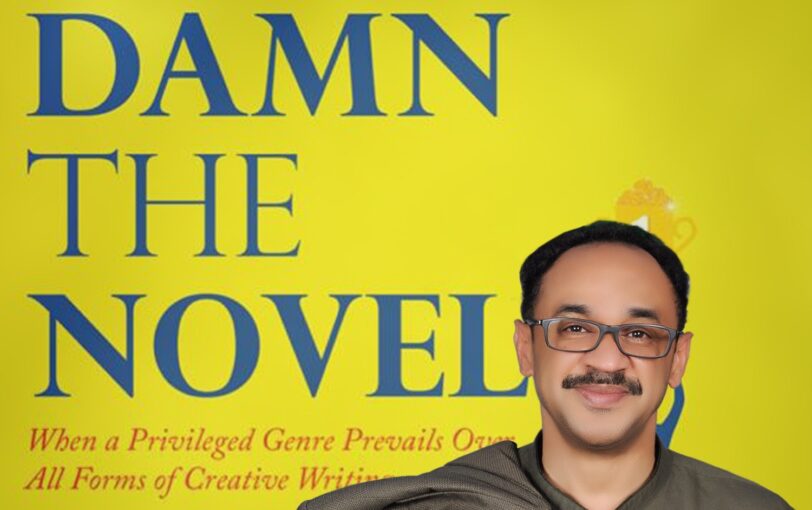
In a series of forty-five short essays that constitute his book translated into English under the title “Damn the Novel: When a Privileged Genre Prevails Over All Forms of Creative Writing,” Sudanese-born poet and essayist Amr Muneer Dahab denounces the privilege granted to the novel, the literary genre that is treated by publishers—and viewed by the public—as superior to all others and is virtually guaranteed marketability and profitability, to the detriment of others.
In this series of posts, the prolific author shares excerpts from the book.

This week: Chapter 40
Submissive Writers
I mentioned before that I rarely believe a writer who says that he doesn’t like stardom. In a recent example, I had to consider Gabriel Garcia Marquez among those writers who I couldn’t believe were annoyed by stardom. But with Garcia Marquez, the story seemed to be a little different. He was offended that he was so famous, even before he got the Nobel Prize. It would not be a great event if it ever came, but more importantly, Garcia Marquez looks like the ones who are less fond of our culture by exaggerating the ideals in general and claiming modesty. The man seems professional and immersed in his work to the point that we claim that it is sufficient, if not to distract him from fishing for the purpose of attracting more attention, at least to get him engaged in his heavy work and, consequently, avoid the claim of humility by any means whatsoever.
A few pages ago, we presented Jean-Paul Sartre, who rejected the Nobel Prize because the prestigious award (the ultimate fame and glory every writer dreams of) would bind him in an institutional framework. And Sartre here far exceeds Garcia Marquez in the place of freedom from the constraint of imposed stardom, even if he achieved stardom that he does not seek at all, only thanks to his original work.
But even Sartre does not seem completely free from the power of obedience to his product. Whether before or after his rejection of the Nobel Prize, his rejection embodied the peak of the amazing resistance to the power of the official institution, but this was certainly in favor of an informal institution that he could not absolutely get rid of. Sartre refused the Nobel Prize but did not reject the fame that was assigned to him before the prize, and even the fame of defending existentialism as a philosophy or the liberation of man constitutes a constraint difficult for the writer, even if some people imagine it is possible by moving from one principle to another or from one idea to another. Fame, in terms of its effect on a bewildered powerful creator, looks like a ghost that one can neither live with nor escape from.
Here the author becomes influential (as a less vocal expression of the famous writer) and is influenced by his audience at the same time, and perhaps influenced in general (by some other people/factors) more than being influential, regardless of his illusions imagining himself as a maker of public opinion and influential regarding the formation of the conscience of people. However, after fame in particular, the writer makes—whether he knows it or not—a public opinion that does not anger the public and forms the people’s conscience, and rarely dares doing the opposite of that without monitoring carefully his audience’s satisfaction and avoiding his fans’ discontent.
The influential author gives himself the legitimacy to be subject to the authority of his audience by justifying the flexibility (flattery) that he should have to pass his ideas, which are not going to be absolutely his genuine ideas after reincarnating the audience’s ideas.
In an essay in the Sharjah Cultural Magazine, January 2017, Wassini al-Araj says: “I saw with my eyes at some of the exhibitions writers sitting in a chair by the signature table. When you pass by their empty tables they look filled with anxiety and boredom. When the writer becomes a party to propaganda involving his community-based expertise, passion, religion and many sensibilities; he produces a text that people see themselves in, and he tries to convince his audience that he is interested in the product of his imagination. That solution is double standard and may detract from the prestige and value of the writer, as it turns him into a beggar of readability.”
The idea of begging the reader, in addition to what Al-Araj wants to connote in the above quote, is a step toward the “cage of the audience” that the writer would like to sing from within his future literary pursuit if he wishes himself fame. But if he is already famous, begging readership will mean more stability and empowerment within the golden cage of the masses.
Amazingly, the drift behind the audience was not limited to an idea or a way of “marketing” it, but rather to the literary genre according to readers’ desires/wishes, and this approach will be observed consequently by the writer to justify his manner in following what is considered satisfactory to his fans.
In the same essay, Al-Araj comments: “The time of the novel is necessarily not a matter of domination and race, but also a strong and visible presence at the expense of other forms. Today not everything that is sold is the best in the market, but the rule of vanity sometimes triumphs and becomes valuable: the writers of novels such as Madame Bovary by Gustave Flaubert in the nineteenth century, In Search of Lost Time by Marcel Proust, Crime and Punishment by Dostoevsky, as well as the novels of Claude Simon, those writers did not sell on the day of appearance more than a few hundred and perhaps less, but they remained references/models for humanity.”
Al-Araj proceeds: “In the last book exhibitions that I attended this year, it seemed to me that it went out of the ordinary, much so that if one writer sells all these numbers in the press, I can say that the world is still a good place and that the writers can still live on their writings: these statements depend on what? What is the statistical observatory that confirms this? The statements of the publisher alone are not enough, because they are mostly based on propaganda rather than truth. Intense sales publicity does not turn the novel into Best Seller.”
With the obsession of the writers described above, it becomes easy for the writer to describe himself as eager to be read by people. The terrible thing is that we see him pleading proliferation to the satisfaction of the masses, even by declaring fabricated numbers. At this point, the achievements of the writer will not stop at gaining the title of “beggar of readability,” but he will be boosted to earn the title of “a beggar for audience guidance.”


Soumanou Salifou (administrator)
Soumanou is the Founder, Publisher, and CEO of The African Maganize, which is available both in print and online. Pick up a copy today!