

“Damn the Novel!” An author’s cry against a privileged genre
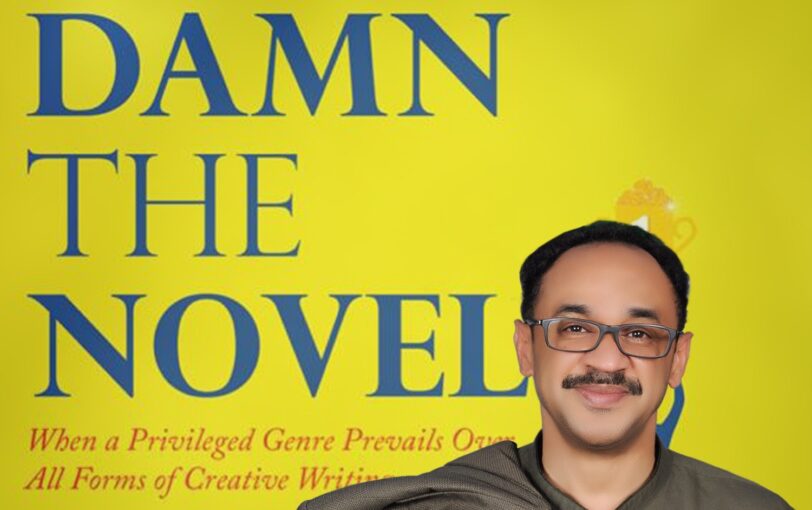
In a series of forty-five short essays that constitute his book translated into English under the title “Damn the Novel: When a Privileged Genre Prevails Over All Forms of Creative Writing,” Sudanese-born poet and essayist Amr Muneer Dahab denounces the privilege granted to the novel, the literary genre that is treated by publishers—and viewed by the public—as superior to all others and is virtually guaranteed marketability and profitability, to the detriment of others.
In this series of posts, the prolific author shares excerpts from the book.

This week: Chapter 29
Novelists Are Cowards!
The saying “the translator is a traitor” is actually an injurious accusation when used in generalizations, but at the same time, it reflects some deep significance, with some reservations of course. For example, the translator is unintentionally a traitor when not able to convey the exact meaning from one language to another despite the considerable effort to honestly convey it. And he/she is intentionally a traitor when he/she conveys meaning liberally, trying to consider the specificities of each language and culture. This is because full literal matching between two languages or cultures is impossible by reasons of difference. All of this may occur when the translator has good intentions, but when the operation is conducted with less good-heartedness, the accusation of treason becomes overt with regard to the translator, with different details from one case to another.
By analogy to the above example, we can invent the expression “the novelist is a coward” as a project dictum perhaps in a way that bears wide interpretations without much embarrassment when it is injected within the market of literature.
The novelist is a coward because he/she hides behind an invented story to express his/her opinion. And by doing so, he does not show the audacity of the poet, who overtly lets out his opinions, making use of his own tongue rather than any other borrowed tongue. When the comparison is drawn between Arab lyric poets and novelists, the distance separating the two (the novelist and the poet) concerning daring in expression, each through his own means, reaches the extreme.
Most interestingly, the novelist does not hide behind one character only to say what he cannot articulate loudly. He instead mobilizes whatever he wants of characters to use their tongues/voices to express not only what he cannot overtly say, but what he lusts for in contradicted words and (deeds).
The novelist, of course, is not required to include an annex to his novel to state his reply or reflect his opinion concerning every word that his characters utter. On the other hand, we cannot deny the happiness that the novelist is immersed in thanks to the artistic nature of his work which bestows his ability to express all that is bubbling up in his chest; that of course happens with no need to be responsible for anything he says (and does). But after ensuring that the consequences are safe, he attributes the work to himself as a glorious achievement of antecedence in breaking through the taboos and deep-rooted beliefs within society.
In this context, the Arab lyric poet has the right to rest proudly in his matchless status. He has indeed endured the whips of modern critics claiming he is unable to shift from the traditional praise, satire, elegy, glory, and love. And perhaps it is time for him to be proud of being ready for all these subjects through his overtly expressed opinion, if the literary pride means plain expression of explicit opinions without any prevarication.
If the equivocation is about what the art is standing on, it has to do with its literary value and esthetic originality, not the fear of falling into the grip of a judicial authority of any kind. We can clearly see that equivocation in conveying meanings to serve for literary creativity was not an issue that undermined Arab lyric poetry in any way, nor a defect of its prominent poets. Instead, they should be proud as they have equivocated artistically and esthetically while loudly and bravely expressing their own opinions without resorting to any other tool of communication (characters), be it animal or human, as their counterparts among the professionals of old and contemporary narrative fiction have been doing.
On the other hand, if the Arab lyric poet made some moral mistakes throughout history—e.g., lying and being hypocritical—he at least had the courage to attribute that to himself because he did not speak those words via someone else’s tongue. Then in return, he is afterward accused of expressing his personal opinion among the many themes included in his work; he is actually judged by the argument that overt expression of personal attitudes spoils the jubilance attributed to the work and closes the doors of potential interpretations that may hide what the writer tries to convey.
Storytelling practitioners, on the contrary, have also demonstrated a great deal of courage expressing themselves in public. But we have to be aware that their courage occurs mostly far from their work or in the margins (in a public event or a seminar about one of their works, for example). It is actually a noticeable habit that cannot be ignored when comparing novelists to poets, lyric poets specifically.
Accordingly, it seems that inserting personal views within the artistic/literary work is a unique trait/capacity about which we will not say that an artist or man of letters must not do, but we will say that it is the literary genre that cannot afford it in most cases. Thereby, this trait is worthy of more appreciation than it has been granted.
Actually, it is a common fact that a forensics report should not be influenced by the personal opinion of its writer. But I do not know how this generalization can be applied in a literary piece of work. The story, the play, and the novel have their own aesthetics for a variety of artistic reasons, none of which is the consideration of being entirely free from any personal interference on the part of writers. The opinions of authors are included anyway, but in a disguised way, as we have already stated. However, what is most important is that including a personal opinion of the writer in his literary work drives him plainly to bear it in all verses (in the case of vertical poems, for example), and that it cannot be considered as a defect in the work. In parallel, it is not a defect of other genres if not included except when the disagreement is about the boldness to express opinion overtly and not through disguises, and overtly through newspapers or during literary forums.
In this respect, when referring to the novelist in terms of speech boldness, the matter still seems ambiguous if the intended boldness means breaking through deep-rooted beliefs or exhibiting social taboos and not inserting new forms of expression in the structure of the literary work. It is logical to say a “daring novel,” not a “daring novelist.”
And if it is logically righteous for the lyric poet as discussed earlier to override the novel writer (and the writer of the story, the play, TV drama, etc.) when it comes to personal daring, then the champion of literary audacity is the writer of autobiography, especially when he talks about himself without any constraints.
Nevertheless, because daring alone is not enough to produce esthetically good literature, the most important aspect worthy of consideration in terms of tracking original literary work lies, above all, in the depiction of the theme with no prior claims (propaganda or other) of daring in tackling social taboos, even if the market temptations trigger the willingness to pursue those claims in this era or in another.


Soumanou Salifou (administrator)
Soumanou is the Founder, Publisher, and CEO of The African Maganize, which is available both in print and online. Pick up a copy today!