

Why Yemen Demands a Clear U.S. Choice
What Sudan and Afghanistan Reveal About Picking Stability Over Chaos?
By Mekki Elmograbi
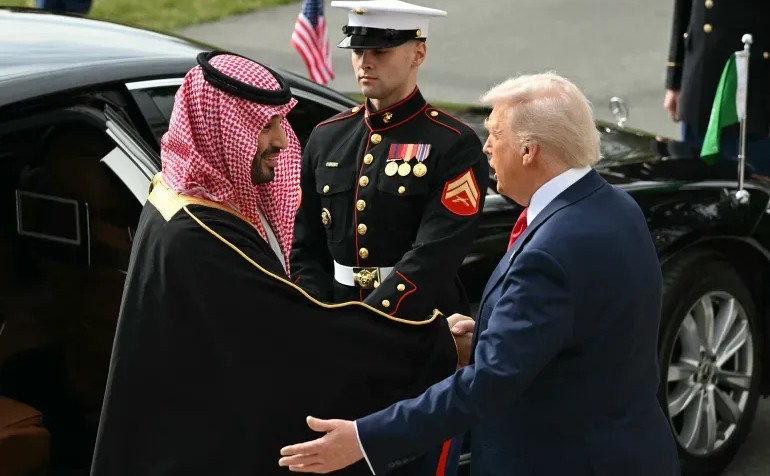
Given Donald Trump’s emphasis on security-first foreign policy, any serious U.S. administration would be expected to address the Saudi–UAE divergence in Yemen directly, treating the conflict as a strategic file rather than a diplomatic afterthought. Yemen is not merely a humanitarian case or a peripheral dispute; it sits at the intersection of Red Sea security, Gulf stability, and Iran’s controversial role. Yet history suggests that U.S. foreign policy, even when well-intentioned, often repeats avoidable mistakes when realism is deferred in favor of ambiguity.
The Biden administration’s withdrawal from Afghanistan remains a defining example. U.S. policy there was widely seen as disconnected from on-the-ground security realities, culminating in a rapid Taliban takeover that caught Washington off guard despite ample warnings. The collapse of the Biden-backed Afghani government strained alliances, weakened deterrence, and sent a clear message to both allies and adversaries: principles alone cannot replace strategic balance, credible force, and hard security calculations.
Yemen now presents a comparable test. Washington can either hover above the growing Saudi–UAE divergence or engage pragmatically, recognizing that neutrality in moments of strategic fracture often translates into influence lost. History shows that delay carries costs. Aligning with the regional partner most committed to unity, state legitimacy, and institutional continuity reflects realism rather than favoritism—and better serves long-term U.S. interests, particularly in securing the Red Sea corridor and Bab al-Mandab.
The Saudi–UAE split in Yemen stems from fundamentally different approaches to an enduring conflict. While both Riyadh and Abu Dhabi initially united against the Iran-aligned Houthi movement, their priorities have since diverged. Saudi Arabia has emphasized reinforcing Yemen’s internationally recognized government and preserving territorial unity as the foundation of regional stability. The UAE, by contrast, has backed the Southern Transitional Council (STC) in the south, reshaping internal power dynamics and introducing competing centers of authority.
This dilemma mirrors another costly U.S. miscalculation: Sudan. By tolerating and, at times, accommodating UAE’s influence at the expense of state legitimacy, Washington undermined its own standing with Sudanese institutions, complicated Egypt’s security concerns, and indirectly contributed to regional fragmentation. The humanitarian catastrophe that followed underscored a familiar lesson—when the U.S. avoids choosing stability-oriented partners in favor of short-term maneuvering, instability fills the vacuum. Now, U.S. administration needs Sudan again. Luckily, U.S.-Sudan counterterrorism partnership remained—against all odds—active, and the recent visit of Sudan’s Chief intelligence General, Ibrahim Mufaddal, to Washington was a good start for the new year.
Critics may argue that favoring Riyadh risks overcentralizing influence or sidelining other partners. But realism is not about equal treatment; it is about proportional trust. Structuring U.S. policy around actors that prioritize stability, unity, and institutional continuity reduces exposure to rival agendas that thrive on fragmentation, an approach that requires backing leadership capable of consensus-building rather than factional escalation.
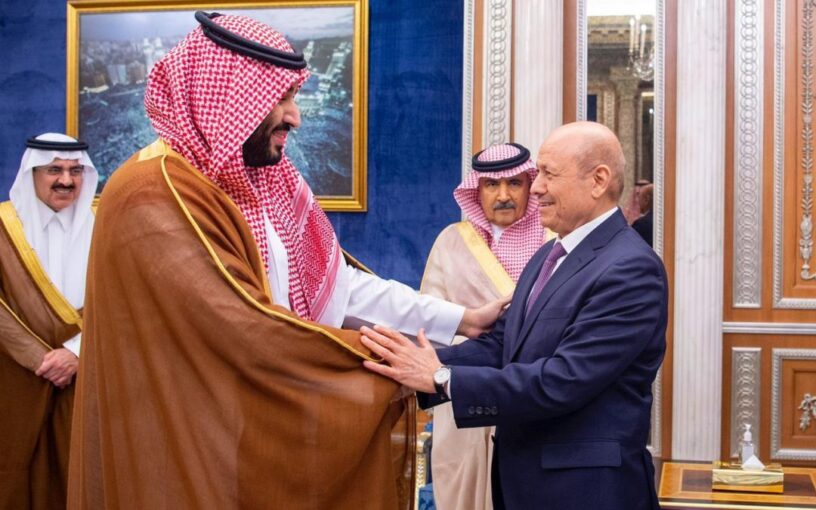
Rashad al-Alimi, Chairman of the Presidential Leadership Council, represents a rare profile in Yemen’s fractured political landscape. Pragmatic, understated, and consensus-oriented, he has avoided the zero-sum politics that have consumed previous leaders. Rather than pursuing personal dominance or empowering militias, he has focused on keeping disparate forces within a single political framework. In a conflict defined by splintering loyalties, restraint is not weakness—it is strategic discipline. Saudi Arabia’s support for al-Alimi reflects a sober reading of Yemen’s reality: gradual state recovery is preferable to disruptive experiments driven by local strongmen or external ambitions.
For Washington, the choice in Yemen is not between allies, but between outcomes. A policy anchored in unity, legitimacy, and security realism—coordinated closely with Saudi Arabia—offers the best chance to protect U.S. interests, contain Iranian influence, and stabilize one of the world’s most critical maritime corridors. The alternative is familiar, costly, and unnecessary.
Advocates of the Abraham Accords should also recognize the risks of elevating the UAE–Israeli alignment as a regional model at the expense of stability. When normalization is associated with fragmentation, proxy politics, or perceived interference in fragile states, it damages rather than advances the cause of peace. Linking the Abraham framework to instability risks giving it a toxic image across the Arab world, where public opinion remains sensitive to sovereignty and order. Peace initiatives that appear detached from regional realities invite backlash, not acceptance. If Abraham-style cooperation becomes synonymous with disruption, it will face broad and uncompromising rejection—undermining both U.S. interests and the long-term viability of normalization itself.
_________
Mekki Elmograbi is a Consultant on African Affairs, Media-Governance Solutions, and Currently, he is Sudan’s Focal Point for Non-State Actors – Available for Online US Engagement.


Soumanou Salifou (administrator)
Soumanou is the Founder, Publisher, and CEO of The African Maganize, which is available both in print and online. Pick up a copy today!