

A call to suspend Rwanda from AGOA
BY CHRISTOPHER ZRAZIK
It’s time to suspend Rwanda’s duty-free access to the American market. Overflowing morgues, widespread looting, and shortages of food and medicine: violence is escalating rapidly in the eastern Democratic Republic of Congo (DRC). Rwanda-backed M23 rebel forces seized the strategic city of Goma, the capital of the North Kivu province, at the end of January and Bukavu, the provincial capital of South Kivu, in mid-February. Despite international condemnation, M23 leaders pledged to continue their offensive all the way to Kinshasa, the Congolese capital, 1,000 miles west of Goma. Their indiscriminate killings and sexual violence will surely continue.
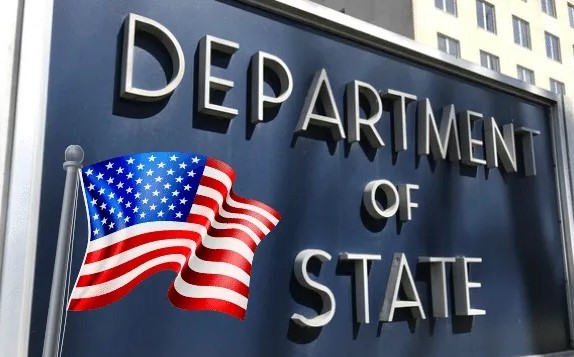
It’s no secret that the Rwandan Defense Forces have contributed men and materiel to M23’s human rights abuse-riddled incursion into the DRC. As such, the Department of State, in consultation with the Department of Labor and the United States Trade Representative, should move to suspend Rwanda’s eligibility for benefits under the African Growth and Opportunity Act (AGOA).
Since its inception in 2000, AGOA has been the cornerstone of economic relations between the United States and sub-Saharan Africa. It provides duty-free access to American markets for select goods from eligible countries, boosting exports, encouraging investment, and stimulating economic growth. Today, 32 countries, including Rwanda, are part of the program. Countries must meet AGOA’s stringent eligibility criteria, including the protection of human rights and the rule of law.
The United States has repeatedly condemned Rwanda’s support for M23 and presence in DRC territory. M23 and linked entities and individuals are under sanctions. The Biden Administration brokered a 2023 ceasefire and 2024 humanitarian truce that paved the way to an Angolan-mediated ceasefire. However, these peace initiatives have been short-lived. They did not prevent the latest offensive, and they did not satisfy Rwanda’s unspoken desire for a slice of the DRC’s mineral wealth.
Suspension of Rwanda’s AGOA benefits should be the next step. It is an effective tool to demonstrate displeasure with the Rwandan government’s support for M23.
There is a precedent for such a move. Several African countries have lost AGOA benefits for violations of the rule of law, human rights, and political violence criteria. In addition, the first Trump Administration suspended Rwanda’s benefits for apparel exports in 2018 in response to tariffs on used clothing imports from the United States. The Rwandan government elected to cover the duties levied on exporters. With an across-the-board suspension on the table, the Rwandan government will need to decide whether it can afford the loss of markets, thus cutting into funds for M23’s offensive. Rwandans will not view this outcome favorably, and they will likely pressure their government to change course.
Critics will argue that a more diplomatic approach, such as continued engagement with Rwandan and Congolese officials, is necessary. However, the dire situation does not afford the international community the luxury of time needed for this approach alone. Suspension of AGOA benefits is a tangible response that aims to compel Rwanda to reevaluate its support for the offensive. This move may elicit retaliatory action from Rwanda and negatively impact bilateral relations which have improved since the Rwandan Genocide. Yet standing with the DRC in support of the responsible, licit sourcing of minerals is good for American companies active, or seeking to be active, in the region.
The suspension of benefits could drive Rwanda away from the United States, giving China and Russia an opening. However, President Trump’s recent economic diplomacy with Colombia, Canada, and Mexico shows that tangible results can be achieved from such measures. In each of these instances, a pause on tariffs or return to the status quo followed newly made commitments by these countries’ leaders. In this case, we may be able to reverse Rwanda’s aggressive behavior.
Suspension of Rwanda’s AGOA benefits is a logical and necessary response to the Rwanda-backed M23’s egregious violations of the DRC’s territorial integrity. This Administration has not hesitated to utilize economic tools to achieve foreign policy wins for the American people. Suspension rather than termination of benefits gives Rwanda the opportunity to course correct, cease involvement in the DRC, and help bring an end to the conflict. We should not extend trade benefits to those that flout international law, invade countries, and displace innocent civilians. Rather, we should extend trade benefits to those that promote the rule of law, peace, and human rights.
Christopher Zrazik is pursuing an M.A. in Security Policy Studies at the George Washington University. He has an interest in sub-Saharan Africa and the Eastern Mediterranean, having studied and spent time in both regions.
____________
Disclaimer
The views expressed in this article are the author’s own and do not necessarily reflect The African‘s editorial policy.


Soumanou Salifou (administrator)
Soumanou is the Founder, Publisher, and CEO of The African Maganize, which is available both in print and online. Pick up a copy today!