

The war in Ukraine taking a toll on US-South Africa relation
BY JIBRIL TURE
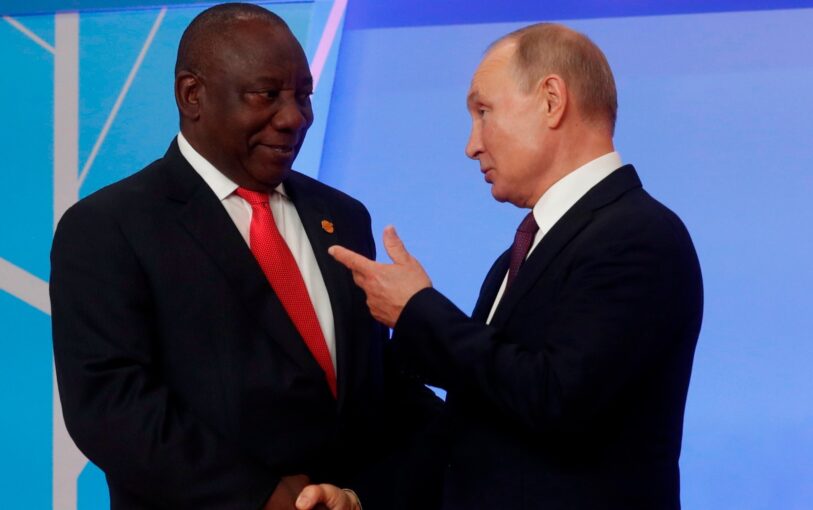
The strengthening relationship between American long-time ally South Africa and Russia, notably the recent alleged shipment of weapons by Pretoria to Moscow in support of the war in Ukraine, is a potential cancer in U.S.-South Africa relation and an unwelcome turn of events for President Biden’s aggressive plan to partner with sub-Saharan Africa.
In a bipartisan letter dated June 9 addressed to U.S. Secretary of State Antony Blinken, U.S. Trade Representative Katherine Tai, and National Security Advisor Jacob J. Sullivan, two leaders of the U.S. House of Representatives and two of their colleagues in the Senate express their concerns that the deepening of South Africa’s relation with Russia, especially since Putin’s army invaded Ukraine last year, is detrimental to U.S. National Security.
The letter, obtained by the New York Times, was signed by Senator Christopher A. Coons, Chairman of the Subcommittee on State, Foreign Operations; Senator James E. Risch, Ranking Member, of the Senate Foreign Relations Committee; Representative Michael T. McCaul, Chairman of the House Foreign Affairs Committee; and Representative Gregory W. Meeks, Ranking Member of the House Foreign Affairs Committee.
The legislators are asking the executive branch to use the upcoming forum of the African Growth and Opportunity Act, AGOA—scheduled in August in South Africa—as a leverage to punish the South African government. (AGOA, signed into law in 2000 by then-President Bill Clinton, currently provides duty-free access to the U.S. marketplace for three dozen African nations, including South Africa, the program’s largest beneficiary which last year exported $3 billion worth of goods to the United States thanks to AGOA).
In the letter, the legislators write that South Africa has deepened “its military relationship with Russia over the past year,” adding that “Late last year, a Russian cargo vessel subject to U.S. sanctions docked in South Africa’s largest naval port, and intelligence suggests that the South African government used this opportunity to covertly supply Russia with arms and ammunition that could be used in its illegal war in Ukraine.” The lawmakers also point out an array of damning evidence such as the joint military exercises Pretoria held with Russia and China in February; the country authorizing a Russian military cargo plane—subject to U.S. sanctions—to land at South African air force base, not to mention the upcoming BRICS summit to be hosted in South Africa; an event, the U.S. lawmakers say, that will strengthen ties with China and Russie. To crown it all, the letter says, the host country is working to facilitate the participation of the Soviet autocrat.
This letter adds to the suspicion, widespread in Washington, about South Africa siding with Russia, an allegation denied by the Pretoria government. According to the Associated Press, the South African government, under pressure, declined, on May 24, to release the cargo documents of the ship that allegedly carried the consignment of weapons for Moscow. At the same time, the office of President Ramaphosa reaffirmed its neutrality in the war in Ukraine.
However, as if to corroborate Washington’s suspicions about South Africa’s troubling rapprochement with Moscow, the Secretary General of the South African ruling party, Fikile Mbalula, speaking to the BBC in connection with Putin’s visit to South Africa, said in an excerpt posted on the ANC social media: “If it was according to the ANC, we would want President Putin to be here, even tomorrow, to come to our country.”
In the face of all this, the four American legislators write: “We are seriously concerned that hosting the 2023 AGOA Forum in South Africa would serve as an implicit endorsement of South Africa’s damaging support for Russia’s invasion of Ukraine and possible violation of U.S. sanctions law.”
The White House has so far not made any retaliatory move or even made any strong public statement about the matter, probably waiting for the outcome of the investigation President Ramaphosa promised into the allegations of arms shipment to Moscow.
This comes as an unwanted development for the Biden administration’s aggressive plan to partner with Africa, as evidenced by the Second U.S.-Africa Leaders Summit the president convened in December 2022 in Washington—which was attended by 49 African leaders. Not only did President Ramaphosa made a state visit to Washington three months prior to the summit, meeting with President Biden on September 16, but he was also treated to breakfast by Vice President Kamala Harris—a rare occurrence for visiting African leaders.
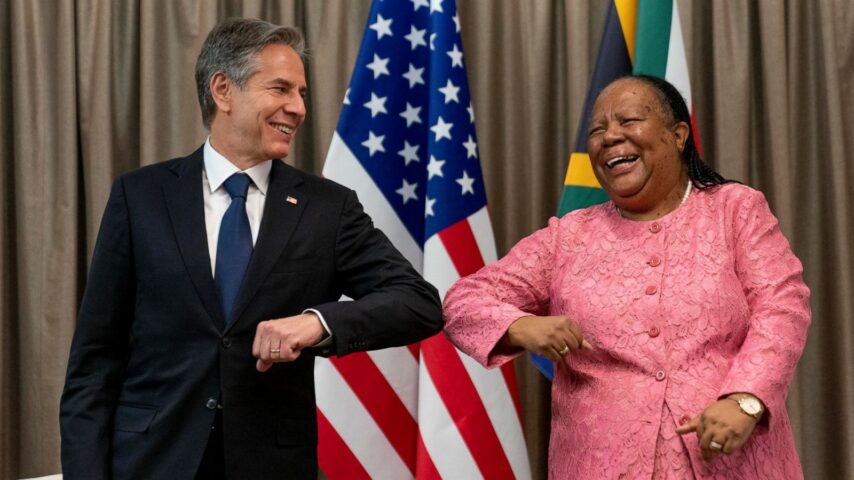
Strengthening U.S. ties with South Africa has been one of the priorities of Secretary of State Antony Blinken’s diplomatic activities on the continent. Not surprising so, given that the rainbow nation—which the United States helped dismantle the racial apartheid regime in the 1980s—is Africa’s second largest economy, with a population of more than 60 million, and an important U.S. ally. The U.S.-South African Strategic Dialogue held in Pretoria on August 8, 2022, not to mention the frequent visits to Washington by Blinken’s South African counterpart, Naledi Pandor, speak to that.


Soumanou Salifou (administrator)
Soumanou is the Founder, Publisher, and CEO of The African Maganize, which is available both in print and online. Pick up a copy today!